


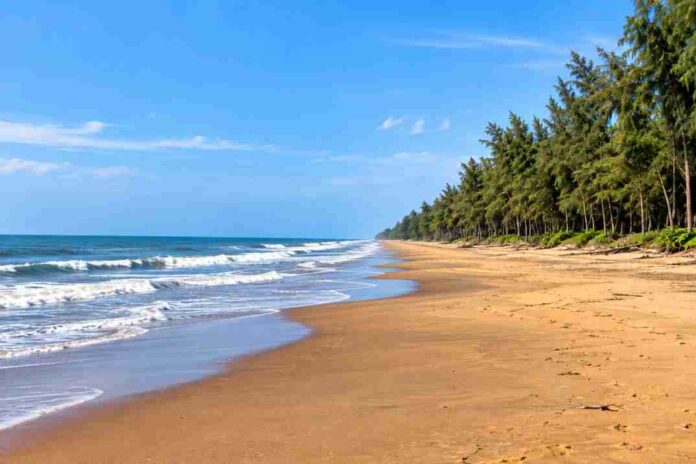
Pentha Sea Beach isn’t the usual Odisha beach.
You won’t find busy food stalls, loud music, water sports, or rows of hotels here. The beach feels raw, quiet, and almost untouched.
Pentha sits in Kendrapara district near the Gahirmatha coast and the Bhitarkanika mangrove area. Thick casuarina trees line parts of the shore, and tiny red ghost crabs move across the sand.
But there’s something else that makes Pentha unusual.
A huge sea wall stands along the coast. The structure was built to slow coastal erosion and protect nearby villages from strong waves.
If you’re planning a trip here, don’t trust polished travel photos alone. Pentha needs some planning. The last road section is narrow, food options are almost zero, and you need to leave before dark.
Here’s what the trip really looks like.
What Is Pentha Sea Beach Actually Like?
Pentha is part of the Gahirmatha coastal area.
The beach sits close to the Bhitarkanika mangrove ecosystem, so the landscape differs from popular beaches such as Puri.
Don’t expect clear blue water and white sand.
The sea here can look muddy due to river water and sediment. The sand has a brown or golden tone.
What you get instead is peace.
There are casuarina trees, open sand, red ghost crabs, and very few visitors. If you enjoy quiet places, photography, and nature, this setting can be quite special.
The huge geo-tube sea wall is another major feature.
Why Is the Pentha Sea Wall Famous?
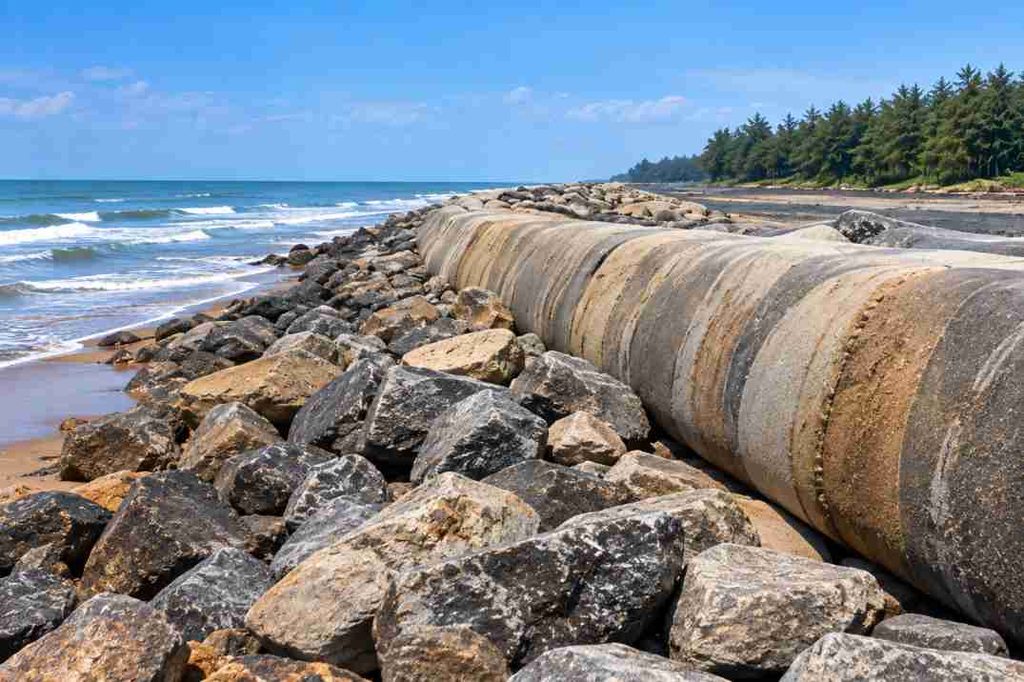
The sea wall is probably the most unusual thing you’ll see at Pentha.
Coastal erosion had become a serious problem in this area. Large sections of land had been lost, putting nearby villages at risk.
Under the Integrated Coastal Zone Management Project, the government worked with the World Bank and IIT Madras on a 505-metre geo-tube wall.
The original structure used large geo-synthetic tubes filled with sand.
The project later faced environmental concerns.
Nature lovers and the Forest Department raised concerns about Olive Ridley turtles using the beach for nesting. The concern was that a sea wall could affect turtle access to the shore.
Today, the original geo-tube structure has a large stone and boulder barrier around it. Reaching the water can mean crossing these rocks.
So Pentha has an unusual mix of nature and coastal engineering.
You can see the result of years of effort to protect people from the sea.
Olive Ridley Turtles at Pentha
Pentha lies close to the Gahirmatha coast, one of the major Olive Ridley turtle nesting areas.
During the nesting season, large numbers of turtles come ashore at night.
This mass nesting event is called an Arribada.
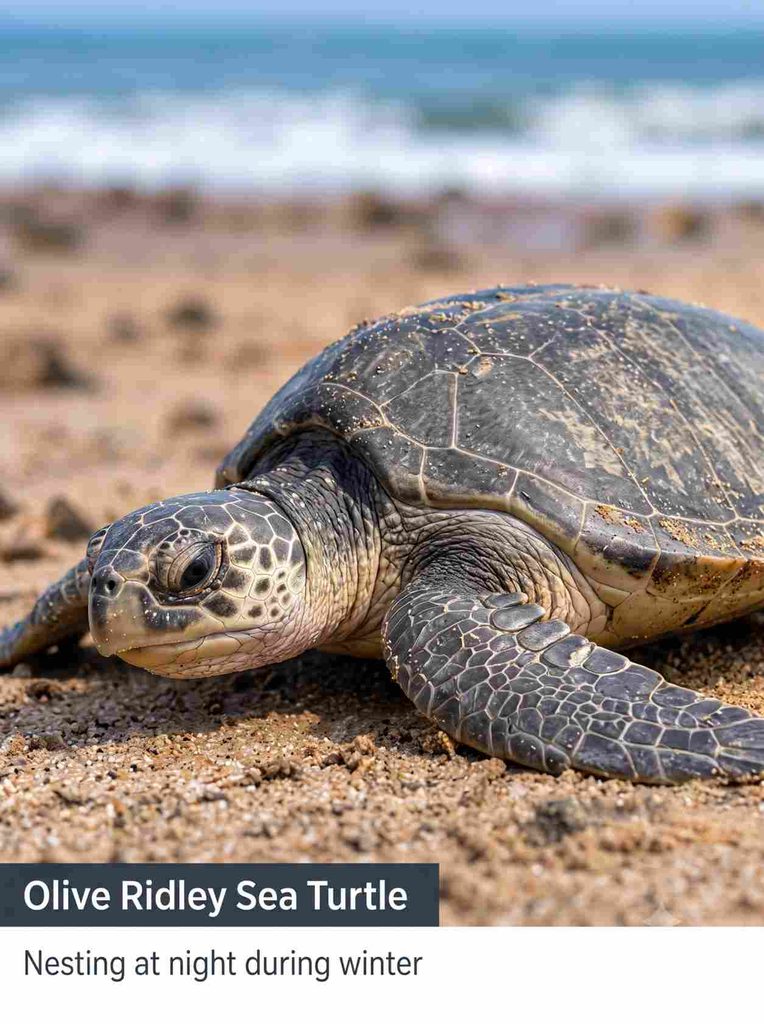
You shouldn’t expect to see turtles during a normal daytime beach visit. The nesting areas have strict rules, and forest guards control access.
Visitors are cleared from the beach before sunset during sensitive periods.
That’s a major reason Pentha has very little commercial development.
The beach isn’t set up like a normal tourist destination. Wildlife protection comes first.
The Beach, Sand and Red Ghost Crabs
One thing you may notice within minutes is the number of red ghost crabs.
Thousands can move across the sand during the day. Walk near them and they disappear into their holes in seconds.
The sand is firm and brownish-gold.

It’s good for walking, but don’t expect soft white sand like some famous tourist beaches.
Behind the beach, casuarina trees provide some shade.
There are very few permanent shops or vendors. Outside the seasonal Eco Retreat, you may find no food stalls at all.
That changes the way you need to plan your visit.
Pentha Sea Beach Distance From Bhubaneswar and Cuttack
The drive is longer than many first-time visitors expect.
The highway section is fairly easy. The final village roads slow things down.
Here are practical travel figures from the source guide:
| Starting point | Approx. distance | Map time | Real driving time |
|---|---|---|---|
| Bhubaneswar Airport | 134 km | 3 hr 15 min | Around 3 hr 45 min |
| Cuttack | 108 km | 2 hr 40 min | Around 3 hr 10 min |
| Kendrapara | 45 km | 1 hr 10 min | Around 1 hr 30 min |
| Rajnagar | 12 km | 25 min | Around 30 min |
| Paradip | 78 km | 2 hr 10 min | Around 2 hr 30 min |
| Kolkata | 440 km | Around 9 hr | 10+ hr |
Don’t plan your journey using map time alone.
Traffic around Cuttack and Salepur can add time. Rural roads near Pentha are much slower than the main highways.
The Real Route to Pentha Beach
For most visitors from Bhubaneswar or Cuttack, the route looks like this:
Cuttack → Jagatpur → Salepur → Kendrapara → Pattamundai → Rajnagar → Pentha
The first part is the easy section.
Cuttack to Kendrapara
The road through Salepur and toward Kendrapara is paved and fairly smooth.
Traffic can slow you down around busy market areas.
Kendrapara to Rajnagar
The road gets narrower after Kendrapara.
You’ll pass through villages, so tractors, bikes, animals, and local traffic can slow your speed.
Rajnagar to Pentha
This is where the trip changes.
Rajnagar is the last major town before Pentha.
The final 10–12 km can be narrow and rough. Some sections are single-lane dirt roads.
If another large vehicle comes from the opposite side, passing can become difficult.
Drive slowly here.
Don’t plan to reach Pentha just before sunset. Give yourself enough time for the return journey.
Can You Reach Pentha by Bus?
Yes, but public transport needs more effort.
You can take a bus from Badambadi in Cuttack to Rajnagar. The source guide puts the fare around ₹120–₹150.
From Rajnagar, you’ll need an auto or another local vehicle for the final stretch.
Local drivers may ask around ₹300–₹500 one way, since they may have to return without passengers.
If you travel with a group, a private cab can be easier.
A round-trip taxi from Bhubaneswar to Pentha may cost around ₹3,500–₹4,500 for the day, based on the source guide.
Ask your driver if they’re comfortable with the narrow road after Rajnagar.
Are There Hotels Near Pentha Sea Beach?
This is one of the biggest differences between Pentha and popular Odisha beaches.
There are no normal beach hotels directly on the sand.
The location sits close to protected forest and turtle nesting areas, so large permanent beach development isn’t common.
You have two main choices.
Pentha Eco Retreat
Odisha Tourism sets up a seasonal Eco Retreat camp near the beach.
The source guide lists the operating period as December to March.
The tents have features such as air conditioning, attached bathrooms, beds, and wooden floors.
A standard tent can cost around ₹6,000–₹8,000 per night, with premium tents costing more than ₹12,000.
The location is the main attraction.
You can stay right near the beach and enjoy the quiet setting.
The catch?
There are almost no shops or cafes outside the camp.
Stay Near Bhitarkanika
For cheaper rooms or trips outside the Eco Retreat season, stay around Bhitarkanika or Rajnagar.
Dangamal Nature Camp is one option. The source guide puts room rates around ₹2,500–₹4,000 per night.
Private resorts near Rajnagar and Khola may cost around ₹2,000–₹5,000 per night.
Staying in this area makes sense if you want to combine Pentha with a Bhitarkanika trip.
Pentha Beach Entry Fee and Timings
The beach itself doesn’t require an entry ticket.
Here’s the basic cost guide:
| Item | Approx. cost |
|---|---|
| Beach entry | Free |
| Car parking | ₹30–₹50 |
| Bike parking | ₹10–₹20 |
| Beach access | Daytime only |
| Food | Carry your own |
The beach is generally used from sunrise to sunset.
Don’t plan to stay after dark.
Forest staff may clear visitors from the beach to protect wildlife.
Is Food Available at Pentha Beach?
Don’t count on it.
There are no regular restaurants, cafes, or permanent food stalls on the beach.
The seasonal Eco Retreat is the main exception.
Before leaving Rajnagar, buy your food and water.
Carry at least 2 litres of drinking water per person for a longer daytime visit.
This one step can save you a lot of trouble.
Best Time to Visit Pentha Sea Beach
The season matters a lot here.
October to March
This is the most suitable period for a comfortable beach visit.
The weather is cooler, roads are usually easier to use, and the winter Eco Retreat operates during part of this period.
July to September
Monsoon trips need more care.
Heavy rain can affect the village roads. The sea can become rough, and low-lying roads may face waterlogging.
If your main goal is a relaxed beach trip, this isn’t the easiest season.
April to June
Summer can become very hot.
Temperatures can reach around 40°C.
There are few facilities near the beach, so heat can make a long daytime visit uncomfortable.
For most visitors, the cooler months make planning easier.
Things to Do at Pentha Sea Beach
Don’t expect a long list of activities.
Pentha is about nature and quiet time.
Walk Along the Sea Wall
The large sea wall is the main man-made attraction.
You can see the boulder barrier and the structure built to protect the coast.
Be careful around loose rocks.
Watch the Red Ghost Crabs
The crabs are everywhere on parts of the beach.
Sit quietly and watch them come out of their holes.
Avoid chasing or touching them.
Relax Under the Casuarina Trees
The trees behind the beach provide a good place to sit.
Carry your own lunch and water.
Don’t leave wrappers or bottles behind.
Watch the Sunrise
The beach faces the sea, making sunrise a good time for photography.
If you’re staying at the winter Eco Retreat, you can reach the beach early without a long drive.
What Should You Carry?
Pentha has very few facilities, so pack before leaving Rajnagar.
Take:
- Drinking water
- Packed food
- Cap or hat
- Sunglasses
- Sunscreen
- Good walking shoes
- Basic medicines
- First-aid items
- Power bank
- Cash
- Waste bags
Good footwear matters.
You may need to walk over stones and large rocks near the sea wall.
Carry your own waste bag too. There may be no bins around the beach.
Take your waste back with you.
Is Swimming Safe at Pentha?
I wouldn’t treat Pentha as a swimming beach.
The water can look muddy, and the sea conditions can change.
The area also has strong currents and limited rescue support.
There are no regular lifeguard services like those found at major tourist beaches.
Stay close to the shore and avoid going into deep water.
The sea wall creates another hazard. Waves can hit the rocks with force.
Keep a safe distance from the edge.
Pentha Beach Safety Tips
Leave the beach before dark.
There are no proper streetlights along the final village road. Driving back late can be difficult.
Keep an eye on the tide near the water.
Don’t climb unstable rocks.
Don’t enter dense forest areas.
Pentha sits close to the Bhitarkanika ecosystem. Open beach areas are suitable for visitors, but deep forest areas should be left alone.
Follow instructions from forest staff.
Wildlife protection rules exist for a reason.
Places to Visit Near Pentha
If you’re travelling this far, don’t make Pentha your only stop.
Bhitarkanika National Park
Bhitarkanika is the obvious addition.
The mangrove forest is known for saltwater crocodiles, deer, birds, and boat safaris.
You can enter through places such as Khola or Dangamal, subject to current entry rules.
Seashore Jagannath Temple
This temple near Keradagarh is around 7 km from Rajnagar.
It’s a small local stop that can fit into your route.
Baladevjew Temple
Located in Kendrapara town, Baladevjew Temple is linked with the area’s religious history.
Kendrapara is already part of the route, so the temple can be added without a major detour.
You can try the local Rasabali sweet too.
Hukitola Island
Hukitola is a more remote option.
You’ll need a boat from Jamboo to reach the island.
The old British-era building there dates back around 150 years and was once used to store rice.
Best 2-Day Pentha Trip Plan
A two-day trip makes more sense than driving all the way to Pentha for a few hours.
Day 1: Bhitarkanika
7:00 AM: Leave Bhubaneswar or Cuttack.
10:30 AM: Reach a Bhitarkanika entry point.
11:00 AM–3:00 PM: Take a boat trip through the mangroves.
4:00 PM: Check into your stay near Rajnagar or Bhitarkanika.
Evening: Rest and have dinner.
Don’t visit Pentha after dark.
Day 2: Pentha Beach
8:00 AM: Have breakfast and pack food and water.
9:30 AM: Leave Rajnagar for Pentha.
10:15 AM: Reach the beach parking area.
10:30 AM–12:30 PM: Explore the beach, sea wall, crabs, and casuarina trees.
1:00 PM: Drive back to Rajnagar for lunch.
2:30 PM: Start your return journey.
This plan gives you time for both the forest and the coast.
Pentha vs Puri vs Chandipur
Pentha isn’t meant to replace a normal beach holiday.
| Feature | Pentha | Chandipur | Puri |
|---|---|---|---|
| Atmosphere | Quiet and wild | Calm | Busy |
| Water | Muddy-looking | Shallow | Deeper |
| Food | Very limited | Easy to find | Many choices |
| Crowd | Very low | Moderate | High |
| Best for | Nature and peace | Families and beach walks | Classic beach trips |
Pick Pentha if you want a quiet coastal experience with fewer tourist facilities.
Pick a major beach if you want food, hotels, shops, and easy access.
Is Pentha Sea Beach Worth Visiting?
Pentha isn’t for everyone.
If you want clean facilities, cafes, water sports, lifeguards, and a busy beach atmosphere, you’ll probably find it too remote.
But if you enjoy quiet beaches, forest roads, wildlife, and unusual places, Pentha offers something different.
The giant sea wall tells a story about coastal erosion and village protection.
The red ghost crabs add a wild touch.
The nearby Gahirmatha coast and Bhitarkanika ecosystem make the area even more interesting.
My advice is simple: don’t treat Pentha as a quick beach stop.
Combine it with Bhitarkanika, start early, carry your own food and water, and return before dark.
That’s when the trip makes the most sense.
Frequently Asked Questions
Can I see Olive Ridley turtles at Pentha Beach?
You shouldn’t expect to see them during a normal daytime visit. Olive Ridleys come ashore at night during the nesting season. Access rules help protect the nesting turtles.
Is Pentha Eco Retreat open all year?
No. The source guide lists the Eco Retreat as a seasonal camp that operates from December to March.
Are crocodiles found at Pentha Beach?
The nearby Bhitarkanika waterways are known for saltwater crocodiles. You shouldn’t enter unknown water around the coast or mangrove area.
How is the road to Pentha Beach?
The main highway sections are easier to drive. The final stretch from Rajnagar is narrow and can be rough. Allow extra travel time.
Do I need a special permit for Pentha Beach?
The source guide says daytime beach access is free and doesn’t require a special forest permit. Separate tickets or permissions may apply if you enter Bhitarkanika National Park or take a forest boat safari.
Is there food at Pentha Beach?
Don’t depend on finding food there. Carry your own meals, snacks, and drinking water.
What is the best time to visit Pentha?
October to March offers cooler weather. The Eco Retreat also operates during part of this period.
How far is Pentha from Bhubaneswar?
The source guide puts the distance from Bhubaneswar Airport at about 134 km. Real driving time can reach around 3 hours 45 minutes.
Quick Checklist Before You Leave
Fill the fuel tank: Rajnagar is the last major stop before the final road section.
Download offline maps: Mobile service can become weak after Rajnagar.
Carry food and water: Don’t expect beach shops.
Start early: The drive takes longer than map estimates.
Leave before dark: The final village road has poor lighting.
Wear good shoes: Rocks and uneven ground are common near the sea wall.
Follow wildlife rules: Pentha is close to sensitive turtle and mangrove habitats.
Final Takeaway
Pentha Sea Beach is a very different Odisha beach.
It isn’t polished. It isn’t crowded. And it doesn’t offer the usual tourist setup.
What you get is a quiet coast, red ghost crabs, casuarina trees, a huge sea wall, and access to one of Odisha’s most important wildlife regions.
The road is part of the experience too.
The highway journey is easy enough, but the final 10–12 km from Rajnagar needs patience.
Carry your own food and water, plan your return before sunset, and leave room in your schedule for the slow roads.
For a better trip, combine Pentha with Bhitarkanika National Park.
You’ll get two very different sides of the same coastal region—mangrove forests on one day and a quiet open beach on the next.

