


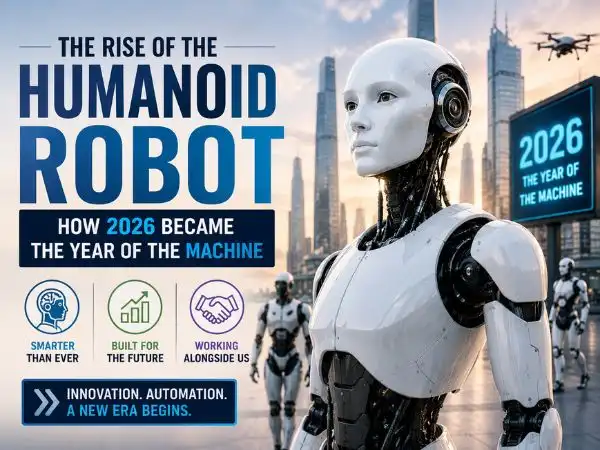
The concept of a humanoid robot—a machine designed to mimic the human form and function—has shifted from the pages of science fiction to the aisles of our factories, warehouses, and increasingly, our homes. As of mid-2026, we are witnessing a technological inflection point where advancements in artificial intelligence (AI), battery density, and dexterous robotics have finally converged.
Whether you’re curious about the impact on the labor market or the technical marvels behind these metallic pioneers, here is everything you need to know about the current state of humanoid robotics.
What Defines a Humanoid Robot?
A humanoid robot is defined by its bi-pedal locomotion, human-like torso, and sensory perception systems that allow it to navigate environments built for people. Unlike traditional industrial robots that are bolted to factory floors to perform one repetitive task, humanoid robots are general-purpose. They are designed to climb stairs, open doors, handle delicate objects, and interact with the physical world in a way that is intuitive and adaptable.
The Technological “Secret Sauce”
Why is 2026 the year humanoid robots are hitting the mainstream? It comes down to three massive breakthroughs:
- Large Behavior Models (LBMs): Just as Large Language Models (LLMs) changed how computers process text, LBMs allow robots to “learn” physical tasks through observation. Instead of programming every single movement, engineers can show a robot a video of a person performing a task, and the robot learns to replicate it.
- Actuation Efficiency: New electric actuators—the “muscles” of the robot—are now powerful enough to lift heavy loads while being small enough to fit inside a sleek frame, significantly extending battery life.
- Real-Time Computer Vision: Robots are no longer “blind.” Using advanced LIDAR and visual processing chips, they can map a room in 3D in milliseconds, avoiding obstacles and interacting with humans safely.
also read : – Google Fitbit Air Fitness Tracker: The Complete 2026 Guide
Key Players Leading the Charge
The market is currently dominated by a few heavy hitters, each targeting different sectors:
- Tesla (Optimus): Focused on high-volume production for automotive manufacturing. Tesla’s goal is to integrate these robots into their assembly lines, with long-term plans to sell them as personal assistants.
- Figure AI: Partnered with OpenAI, Figure is arguably leading the charge in “brain power.” Their robots display an uncanny ability to converse while working, making them ideal for collaborative warehouse environments.
- Boston Dynamics (Atlas): Having recently moved toward an all-electric version of their famous Atlas, they remain the gold standard for agility, balance, and complex physical maneuvers.
The Economic and Ethical Debate
The rise of the humanoid robot is not without controversy. Economists are closely monitoring the impact on manufacturing and logistics jobs. While proponents argue that these robots will fill dangerous, repetitive, or “dirty” roles—thereby reducing human injury—critics express concern over long-term workforce displacement.
Furthermore, as these machines become more “human,” questions regarding liability, safety protocols, and privacy (due to the cameras mounted on them) remain at the forefront of public policy discussions.
Frequently Asked Questions (FAQ)
Will humanoid robots replace humans in the workforce?
Most experts believe we are moving toward a “collaborative” model. Humanoids will likely take over tasks that are physically demanding, repetitive, or hazardous, allowing humans to focus on higher-level decision-making and supervision.
How long until I can buy a humanoid robot for my home?
Industrial-grade robots are currently in pilot phases. Commercial home versions are likely still 5 to 10 years away, as the robots need to become more affordable and robust enough to handle the unpredictable environment of a private home.
Are these robots dangerous?
Safety is the primary focus of all major developers. They are equipped with emergency “kill switches,” soft-shell exteriors, and advanced sensors that force the robot to stop immediately if it detects a person in its path.

