
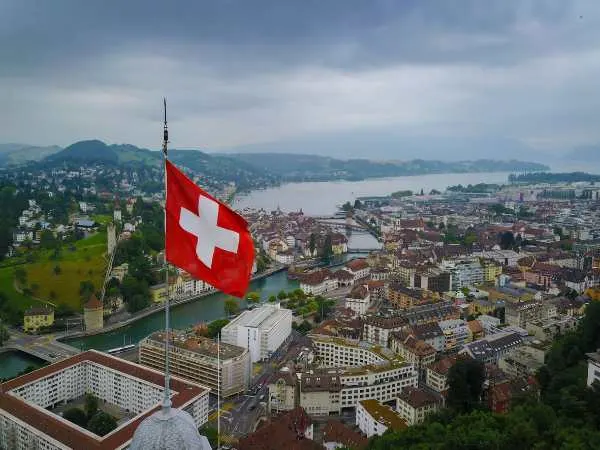
If you’ve ever looked at a Swiss chocolate wrapper and thought, “Wait—why are there like three languages on this one box?”, you’re not alone. Switzerland is one of those countries that looks small on the map… but then hits you with this wild linguistic diversity that feels kinda magical.
I remember the first time I landed in Zurich—I expected everyone to speak English or maybe German. And boom… the announcements sounded like German but not quite German. That’s when someone told me: “Yeah, that’s Swiss German… it’s like German’s chaotic but charming cousin.”
So let’s break the whole thing down—what language do people speak in Switzerland, why so many languages exist in one place, and how much English you’ll hear while roaming Swiss streets.
Why Does Switzerland Have So Many Languages? A Quick Story
Switzerland is a multilingual country because its regions—called cantons—developed independently for centuries. Each canton kept its own culture, food habits, and of course… language. When the country officially formed in 1848, they just said, “Cool, we’ll keep all our languages.” And it worked.
Today, Switzerland recognizes four official languages.
- German (Swiss German)
- French
- Italian
- Romansh
Yep, four. Wild, right?
Let’s break them down one-by-one.
Also read :- Cost of Premium LinkedIn: Real Pricing, Annual Cost, and Whether It’s Worth It
1. German / Swiss German
- Percentage of speakers: ~62%
- Where spoken: Zurich, Bern, Basel, Lucerne, St. Gallen… basically most of Switzerland.
- Fun fact: Spoken Swiss German (“Schwiizerdütsch”) is not the same as High German. Even Germans struggle to understand it.
Written communication—like road signs, newspapers, government documents—is in High German.
But spoken conversations are usually in Swiss German dialects that change from town to town.
2. French
- Percentage: ~23%
- Where: Western Switzerland (Romandy) – Geneva, Lausanne, Neuchâtel
- Vibe: Very similar to Parisian French, with small regional differences.
If you’re wondering…
What language do they speak in Geneva?
French. Geneva is 100% French-speaking in daily life—menus, bus announcements, everything.
3. Italian
- Percentage: ~8%
- Where: Southern Switzerland (Ticino & parts of Graubünden)
- Vibe: Think warm weather, amazing gelato, and people waving their hands while talking.
What language do they speak in Zurich, Switzerland?
Zurich is in the German-speaking region. People speak Swiss German + understand High German.
4. Romansh
- Percentage: ~0.5%
- Where: A tiny part of southeastern Switzerland (Graubünden)
- Vibe: A beautiful Latin-based language that looks like a mix of Italian and old French.
Romansh is protected by Swiss law so it doesn’t disappear.
Do They Speak English in Switzerland?
Short answer: Yes—widely.
Longer answer:
Most Swiss people learn English in school, especially in big cities like Zurich, Geneva, Basel, and Lausanne. You can order food, ask directions, shop around… all in English. Sometimes they’re so fluent it makes you question your own language skills (trust me).
- Hotels? English.
- Restaurants? English menus everywhere.
- Train stations? Announcements in English too.
Switzerland is tourist-friendly like that.
Switzerland Language Percentage Breakdown (Simple Table)
| Language | Percentage of Population | Where Mostly Spoken |
| German / Swiss German | ~62% | North, Central, East (Zurich, Bern, Basel) |
| French | ~23% | West (Geneva, Lausanne) |
| Italian | ~8% | South (Ticino) |
| Romansh | ~0.5% | Southeastern mountains (Graubünden) |
| English (unofficial) | Widely spoken | Big cities, tourism areas |
Is Brazilian and Portuguese the Same Language? (Quick Answer)
Since you included this keyword, here’s the answer in a natural way:
Brazil speaks Brazilian Portuguese, which is technically the same language family as Portugal’s Portuguese—just with different accents, expressions, and vocabulary.
Similar to how US English vs. UK English works.
Why Does Switzerland Speak Portuguese?
They don’t, but you’ll hear a lot of Portuguese in Zurich and Geneva because Switzerland has large immigrant communities from Portugal and Brazil.
How Many Languages Are Spoken in Switzerland Overall?
If we count:
- The 4 official languages
- Regional dialects
- Foreign languages commonly spoken
…it’s well over 20+ languages actively used daily.
But officially: four.
also read :- How to Style an Oversized Coat: Easy Ways to Look Sharp Without Trying Too Hard
FAQs About Switzerland’s Languages
How many official languages does Switzerland have?
Four: German, French, Italian, and Romansh.
What language do they speak in Zurich?
Swiss German (spoken), High German (written).
What language do they speak in Geneva?
French—pretty much everywhere.
Do Swiss people understand English?
Yes, especially in major cities and tourist areas.
Is Swiss German a separate language?
Linguistically it’s a group of dialects, but to outsiders, yes—it feels like an entirely different language.
What language should tourists learn before visiting?
Honestly? English is enough.
But learning a tiny “Grüezi” (hello in Swiss German) makes locals smile.Which is the easiest Swiss language to learn?
Probably French or Italian—Swiss German is quite tough.
Final Thoughts
Switzerland might look tiny, but its languages make it one of the most fascinating countries to explore. Whether you’re walking through a French-speaking café in Geneva or riding a tram in Zurich listening to Swiss German, each region feels like a different country wrapped into one.

