


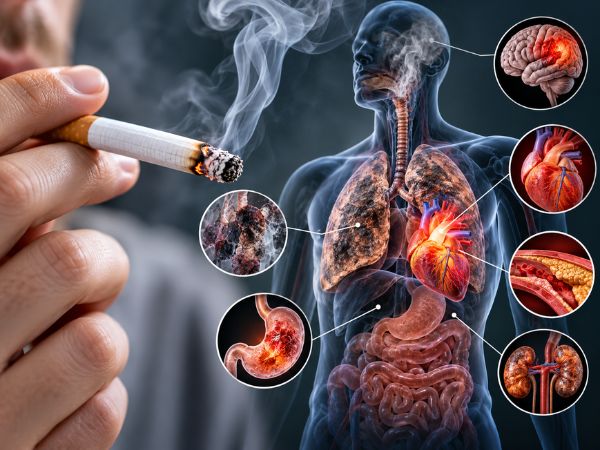
Cigarette smoking is one of the leading causes of preventable death and disease worldwide, severely damaging almost every organ in the human body. When a cigarette burns, it releases a toxic mixture of more than 7,000 chemicals, including at least 69 known carcinogens (cancer-causing substances), such as benzene, formaldehyde, arsenic, and polonium-210. Inhaling these toxins causes widespread damage throughout the body, leading to chronic illnesses, a reduced quality of life, and premature death.
Respiratory System Damage
The respiratory tract experiences the initial and most direct effects of cigarette smoke. Toxic chemicals damage the cilia—tiny, hair-like structures in the airways that help remove dust and mucus. When these structures stop functioning properly, the lungs become more vulnerable to infections and chronic inflammation.
Over time, smoking can lead to chronic obstructive pulmonary disease (COPD), a group of progressive lung conditions that includes chronic bronchitis and emphysema. These conditions cause severe breathing difficulties and can significantly reduce lung function. Furthermore, smoking damages cellular DNA and interferes with normal repair mechanisms, making it the leading cause of lung cancer and accounting for approximately 90% of lung cancer deaths in the United States.
Cardiovascular and Circulatory Damage
Smoking causes significant damage to the heart and blood vessels. Nicotine, the highly addictive chemical found in tobacco, stimulates the central nervous system, immediately increasing heart rate and blood pressure.
At the same time, carbon monoxide in cigarette smoke binds to hemoglobin in the blood, reducing the amount of oxygen available to vital organs. Other toxic chemicals damage the inner lining of blood vessels, causing inflammation and contributing to the narrowing and hardening of arteries. Smoking also makes blood more likely to clot.
These effects accelerate atherosclerosis, the buildup of fatty deposits in the arteries, and increase the risk of dangerous blood clots. As a result, cigarette smoking significantly raises the risk of heart attacks, strokes, and peripheral artery disease.
Also Read : – How Much CRP Level Is Dangerous: Clear Ranges, Age-Wise Charts, and What High Numbers Really Mean
Systemic and Reproductive Health Risks
Beyond its effects on the heart and lungs, cigarette smoking weakens the immune system, making it harder for the body to fight infections and heal wounds. It can also reduce bone density, increasing the risk of osteoporosis and fractures.
Smoking negatively affects reproductive health in both men and women. It can reduce fertility, lower sperm quality, contribute to erectile dysfunction, and cause menstrual and reproductive problems. During pregnancy, smoking increases the risk of serious complications, including restricted fetal growth and premature birth.
In addition, cigarette smoking is directly linked to several types of cancer, including cancers of the mouth, throat, esophagus, stomach, and bladder.
The Dangers of Secondhand Smoke
The dangers of cigarette smoking are not limited to smokers. Secondhand smoke contains harmful chemicals and carcinogens that can seriously affect the health of people nearby, even if they do not smoke themselves.
In infants and children, exposure to secondhand smoke increases the risk of sudden infant death syndrome (SIDS), asthma attacks, respiratory infections, and middle ear infections. It can also cause serious health problems in adults, including heart disease, stroke, and lung cancer.
Quick FAQs: How Smoking Harms Your Health
1. What happens inside your body when you take a puff?
Cigarette smoke contains thousands of chemicals. When inhaled, nicotine races to your brain in seconds to make you crave more, while carbon monoxide displaces oxygen in your blood, forcing your heart to work much harder.
Which parts of the body get damaged first?
Lungs: The smoke burns tiny airway hairs that clean out dirt, leaving your lungs clogged with thick mucus and tar.
Heart and blood vessels: Arteries become sticky, stiff, and narrow, dramatically raising the risk of heart attacks.
Skin and teeth: It stains teeth, causes bad breath, and speeds up skin aging and wrinkles.3. Does smoking only cause lung cancer?
No. While it is the leading cause of lung cancer, smoking also damages DNA across the entire body, raising the risk of mouth, throat, bladder, and stomach cancers.
4. Are “light” cigarettes or vaping safer?
No. Light cigarettes still pump tar and poisons into the lungs. E-cigarettes cut out tobacco leaf combustion, but they still deliver addictive nicotine and chemical vapors that irritate the lungs and blood vessels.
5. Does secondhand smoke really hurt non-smokers?
Yes. Breathing someone else’s smoke forces the same toxic poisons into your lungs. It can trigger severe asthma attacks, heart issues, and respiratory infections, especially in children.
6. Is it too late to quit if someone has smoked for years?
Never. Within 20 minutes of quitting, your pulse settles. Within days, taste and smell sharpen. Over time, your body cleans out built-up gunk, and your risk of heart attacks and cancer drops steadily every year.
Conclusion
In conclusion, cigarette smoking exposes the body to a continuous stream of toxic chemicals and carcinogens. From damaging delicate lung tissue to compromising the cardiovascular system, smoking threatens health at the cellular level and increases the risk of numerous life-threatening diseases.
Because nicotine is highly addictive, quitting smoking can be challenging. However, quitting at any age provides significant health benefits. It reduces the risk of smoking-related diseases, allows the body to begin recovering, and protects family members and others nearby from the harmful effects of secondhand smoke.

