


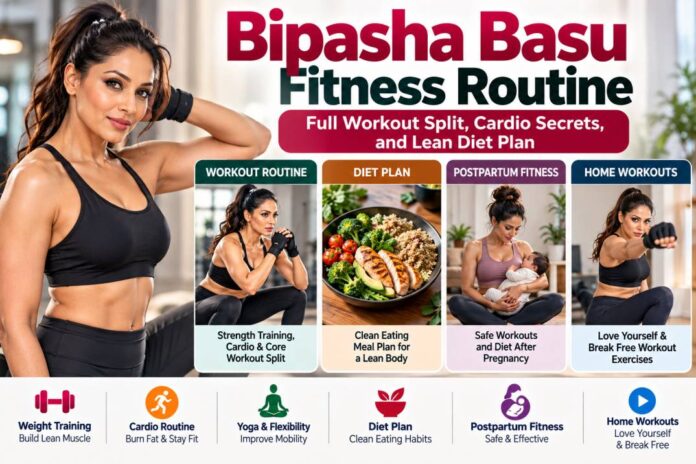
Bipasha Basu has been open about her interest in fitness, strength training, dance workouts, and healthy eating. Her approach has focused on regular exercise, warm-ups, moderation, and finding a routine she enjoys.
Her fitness projects, including Love Yourself, Break Free, and Unleash, brought home workouts to people who wanted to exercise without spending hours in a gym. In interviews, she has discussed cardio, weight training, Pilates, yoga, and balanced meals. The Indian Express reported several of these habits in a 2015 interview. Her routine may have changed since then.
This guide explores the Bipasha Basu fitness routine, her workout philosophy, a practical weekly workout split, a sample meal plan, and her publicly shared postpartum fitness journey. You can use these ideas to build a routine that fits your own goals and fitness level.
The Core Philosophy: Strength, Cardio, and Consistency
Bipasha has described fitness as a long-term commitment rather than a quick fix. Her interviews point to a mix of cardio, weight training, Pilates, home workouts, yoga, and mindful breathing.
In a 2015 interview, she said her morning workout could take several forms, from a home fitness DVD to a gym session or Pilates class. She spoke about adding yoga and breathing exercises to her routine. Read the interview in The Indian Express.
The lesson is simple: you don’t need one perfect workout. A mix of training methods can help you build strength, improve fitness, and stay interested in exercise.
Why Bipasha Swears by Weight Training Over Endless Cardio
Bipasha has spoken about using weight training as part of her fitness routine. A 2017 interview with Hindustan Times discussed her focus on leg strength and the care she takes because of osteoarthritis. Read the interview.
Strength training can help build muscle, support bones, and improve everyday movement. It works best when you choose a suitable load, use good form, and increase the challenge over time.
You don’t need heavy weights to begin. Bodyweight squats, wall push-ups, resistance bands, and light dumbbells can be good starting points.
Try these basic strength exercises:
- Squats or sit-to-stand movements
- Wall or incline push-ups
- Dumbbell shoulder presses
- Resistance-band rows
- Glute bridges
- Planks or easier core exercises
Start with two strength sessions per week. Leave enough recovery time between sessions that work the same muscle groups.
Balancing Flexibility, Yoga, and High-Intensity Movement
Bipasha has spoken about adding yoga and breathing exercises to her workouts. Her home fitness projects have included different forms of exercise rather than one fixed routine.
Yoga can help improve balance, mobility, and body awareness. Dance workouts can make cardio more enjoyable. Pilates can train core control and movement.
You can combine these activities across the week without doing everything in one session.
For a balanced routine, aim to include strength training, moderate cardio, mobility work, and rest. Adults are generally advised to get at least 150 minutes of moderate aerobic activity each week, along with muscle-strengthening activity on two or more days. CDC activity guidelines.
Weekly Workout Split: Step-by-Step Routine
There is no verified public record of Bipasha following the exact seven-day workout split below. This is a sample routine inspired by the training methods she has discussed.
Adjust the exercises, weights, and session length to your fitness level. Beginners can start with 20–30 minutes and build up over time.
| Day | Focus | Example Session |
| Monday | Upper body and core | Push-ups, rows, shoulder presses, dead bugs |
| Tuesday | Lower body | Squats, lunges, glute bridges, calf raises |
| Wednesday | Cardio and mobility | Brisk walking, dancing, gentle stretching |
| Thursday | Full-body strength | Squats, rows, incline push-ups, hip hinges |
| Friday | Cardio | Cycling, dancing, or brisk walking |
| Saturday | Yoga or Pilates | Balance, mobility, core control |
| Sunday | Rest or gentle walk | Easy movement and recovery |
Use this plan as a starting point, not a test of willpower. If your muscles feel sore or your joints hurt, reduce the workload and recover.
Upper Body and Core Toning Circuit
A strong upper body helps with daily tasks, posture, and many sports. Core training can improve trunk control and stability.
Try this beginner circuit:
| Exercise | Sets | Repetitions |
| Wall or incline push-ups | 2 | 8–12 |
| Dumbbell shoulder press | 2 | 8–12 |
| Resistance-band rows | 2 | 10–12 |
| Dead bugs | 2 | 8 per side |
| Plank from knees | 2 | 15–30 seconds |
Rest between sets and keep each movement controlled. Choose a variation that lets you maintain good form. Stop if you feel sharp pain or unusual discomfort.
Lower Body Strength: Glutes, Quads, and Hamstrings
Lower-body exercises build strength for walking, climbing stairs, lifting, and sport. They can train the glutes, quads, hamstrings, and calves.
A simple session could include:
- Squats: 2 sets of 8–12 repetitions
- Reverse lunges: 2 sets of 6–10 per side
- Glute bridges: 2 sets of 10–15
- Hip hinges: 2 sets of 8–12
- Resistance-band side steps: 2 short rounds
Start with bodyweight versions. Add dumbbells or bands only when the movement feels stable.
Bipasha has discussed weight training for her legs and the need to pay attention to her joints. That detail matters: your own plan should reflect your medical history, pain level, and training experience. Get professional guidance if you have a joint condition or an old injury.
High-Energy Cardio and Plyometrics
Cardio helps build stamina and supports heart health. You can choose dance, brisk walking, cycling, swimming, or a low-impact home workout.
Bipasha’s Break Free fitness DVD was built around a dance routine with 68 moves, including a warm-up, main section, and Bollywood-style dance. The project used dance as a way to make exercise more engaging.
You can take the same broad idea and use music for a 20–30 minute home cardio session.
Try this beginner format:
- March in place for 3 minutes.
- Dance to one upbeat song.
- Do step jacks for 45 seconds.
- Walk in place for 60 seconds.
- Repeat the dance-and-recovery pattern three or four times.
- Cool down with slow walking and easy stretches.
Jump squats and burpees are harder options, not required moves. Begin with low-impact versions if you’re new to exercise or have knee, ankle, or back concerns.
Bipasha Basu’s Daily Diet and Nutrition Plan
Bipasha has described herself as a foodie and spoken about eating in moderation rather than following crash diets. In a 2017 interview, she described home-cooked meals such as oats and eggs for breakfast, and chicken, dal, and vegetables for lunch and dinner.
These details are from an older interview. They should not be treated as her current meal plan or a strict diet to copy.
Clean Eating: A Balanced Approach
A useful diet for muscle tone and general fitness should provide enough energy and key nutrients. Cutting out whole food groups is rarely needed for most people.
Build meals around:
- Protein: Eggs, fish, chicken, paneer, tofu, dal, beans, or curd
- Carbohydrates: Oats, rice, whole-wheat roti, potatoes, or other grains
- Vegetables and fruit: A range of colours and types
- Healthy fats: Nuts, seeds, olive oil, or other suitable oils
- Fluids: Water through the day, with more during hot weather or long sessions
Refined sugar can fit into a balanced diet in modest amounts. You don’t have to ban every sweet food to make progress.
The main goal is to eat enough, get a good mix of nutrients, and choose habits you can keep. Your needs will vary with age, activity, health, and training goals.
Sample Daily Meal Plan for Toning and Energy
This sample plan is a general example, not Bipasha Basu’s confirmed daily menu.
| Meal | Example |
| Breakfast | Besan cheela with curd, or eggs with whole-grain toast |
| Mid-morning | Fruit and a small handful of nuts |
| Lunch | Dal or grilled chicken, rice or roti, vegetables, and curd |
| Evening snack | Roasted chana, fruit, or yoghurt |
| Dinner | Paneer, tofu, fish, or beans with vegetables and rice or roti |
Portion sizes depend on your energy needs. If your goal is muscle gain, you may need more food and protein. If your goal is fat loss, a modest calorie deficit may help, but very low-calorie diets can make training and recovery harder.
For personal nutrition advice, speak with a registered dietitian, especially if you have diabetes, kidney disease, digestive issues, or a history of disordered eating.
Postpartum Fitness: Getting Back in Shape Safely
Bipasha Basu has shared parts of her postpartum fitness journey on social media. After the birth of her daughter in November 2022, she posted gym workouts in May 2023 and later shared Pilates sessions in October 2023. Her posts stressed patience and self-acceptance. The Indian Express and India Today reported on these updates.
Her personal experience should not be used as a timeline for someone else. Recovery differs after each birth.
Listening to Your Body After Pregnancy
Begin with movement that suits your recovery, such as easy walking and gentle mobility. Add strength work as your body allows and as your clinician advises.
After a caesarean birth, a complicated delivery, or pelvic-floor symptoms, your return to exercise may need extra care. A healthcare professional or pelvic-health physiotherapist can help you choose suitable movements.
Watch for pain, heavier bleeding, pelvic pressure, urine leakage, dizziness, or a feeling of heaviness. Stop and seek medical advice if these symptoms appear or worsen.
The American College of Obstetricians and Gynecologists advises a gradual return to activity based on the person’s recovery and delivery circumstances. It recommends discussing exercise with an obstetric clinician, especially when complications occurred.
Mental Resilience and Realistic Fitness Goals
Postpartum recovery is more than a change in body size. It can involve disrupted sleep, new caregiving duties, changes in mood, and less time for yourself.
Bipasha’s public posts have spoken about how her body changed after pregnancy and how she worked toward fitness at her own pace.
A realistic plan should start with health, comfort, strength, and energy. Weight changes may come later, and the pace will differ from person to person.
Make room for rest and ask for help when needed. A 10-minute walk or a short mobility session can be useful on a busy day. You don’t have to match an actor’s training schedule to make progress.
Bipasha Basu’s Fitness DVDs: Love Yourself, Break Free, and Unleash
Bipasha has released fitness videos that focus on structured home workouts. They offer a look at her public fitness projects, but they are not proof of her current daily training schedule.
- Love Yourself: A fitness project that promoted exercise and a positive attitude toward self-care.
- Break Free: A dance-based workout built around Bollywood moves, with a warm-up and main routine.
- Unleash: Another fitness release in her workout video series.
If you try a video workout, choose a version that suits your current fitness level. Warm up first, keep water nearby, and use low-impact options when needed. A routine should challenge you without forcing you to ignore pain.
Final Thoughts: What You Can Learn From Bipasha Basu’s Fitness Routine
Bipasha Basu’s publicly discussed fitness habits point to a mix of strength training, cardio, dance, Pilates, yoga, and moderate eating. Her fitness videos brought these ideas to people who wanted to exercise at home.
The most useful lesson is not to copy a celebrity’s body or schedule. Build a routine you can repeat, eat enough to support your activity, and give your body time to recover.
Start with two strength sessions and a few walks or dance workouts each week. Add yoga or mobility work if it feels good. Increase the workload as your strength and stamina grow.
For postpartum exercise or an existing joint condition, get advice suited to your health before you begin. Long-term habits matter more than a fast transformation.

