


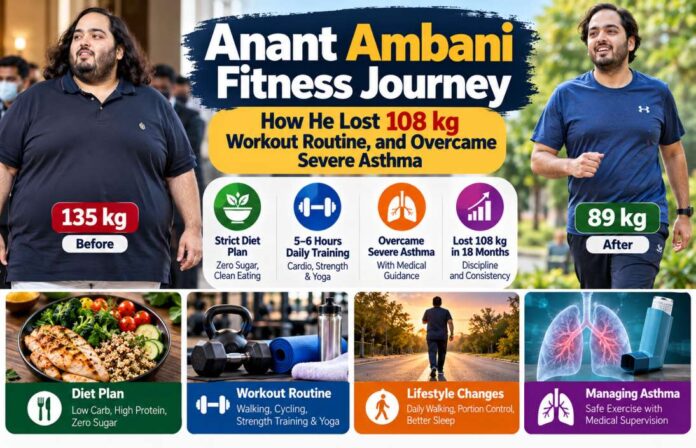
Anant Ambani’s weight loss journey drew wide attention when he appeared in public after a major change in his body weight. News reports described a loss of 108 kg over 18 months, achieved through a planned diet and an intense exercise routine.
His fitness coach, Vinod Channa, spoke about long walks, cycling, yoga, strength training, and changes to food habits. Reports from 2016 and 2024 described a routine that combined several forms of exercise with close attention to diet.
His story stands out for the reported scale of the weight change and the health concerns he faced. It can offer useful lessons about planning, consistency, and professional support.
But his routine should not become a ready-made plan for everyone. His medical history, starting weight, training support, and diet needs were personal to him.
The Massive Transformation: Losing 108 kg Step-by-Step
The reported transformation took place over about a year and a half. It involved a structured training plan and dietary changes rather than a single exercise or food rule.
The Starting Point: Facing Obesity and Severe Health Hurdles
Media reports described Anant as having chronic asthma from childhood. In a 2017 interview, his mother, Nita Ambani, said asthma medication had contributed to his weight gain. Reports on his fitness journey linked the condition with long-term steroid use.
Some steroid medicines can cause weight gain, though the effect depends on the drug, dose, duration, and person’s health. People taking prescribed asthma medicines should never stop or change them on their own to control weight.
Carrying excess weight can make movement harder for some people. Asthma can add another challenge if exercise triggers coughing, wheezing, chest tightness, or shortness of breath.
Anant’s coach reportedly took these concerns into account when planning his exercise. Reports described a gradual start with low-intensity walking and cycling before moving to harder training.
That approach offers an important lesson: a fitness plan must fit the person’s health and starting point. A demanding routine may not be suitable at the beginning.
Setting the Goal: 18 Months of Rigorous Discipline
Reports from 2016 described Anant losing 108 kg in less than 18 months. His coach said the plan involved daily exercise, a controlled diet, and changes to his routine.
The exact details of his medical care, full diet record, and daily schedule are not public. The 18-month figure comes from media reports, not a published medical record.
His story shows how a large goal can be broken into smaller stages. The coach reportedly started with easier movements, built up walking and cycling, then added resistance training and more intense exercises as his fitness improved.
For a person starting a weight loss plan, the first target does not need to be a dramatic number. Better early goals include regular movement, balanced meals, improved stamina, and a routine that can be maintained.
Anant Ambani’s Intensive Daily Workout Regimen
Five to Six Hours of Daily Physical Training
Several reports attributed a five-to-six-hour daily workout routine to Anant’s weight loss plan. The reported activities included walking, cycling, yoga, weight training, flexibility work, and functional training.
The routine is notable for its range of activities. Each type of exercise serves a different purpose.
| Type of Training | Reported Role |
|---|---|
| Walking and cycling | Gradual aerobic conditioning |
| Yoga and flexibility work | Mobility, balance, and body control |
| Weight training | Muscle strength |
| Functional exercises | Everyday movement and overall fitness |
| Higher-intensity cardio | Greater aerobic challenge after building fitness |
The reports do not establish a verified hour-by-hour workout schedule. The five-to-six-hour figure should be treated as a reported detail, not a recommendation.

Most people do not need several hours of exercise each day to improve their health. Adults can gain substantial benefits from a smaller, regular amount of activity, with strength work added during the week. The right amount depends on fitness, age, medical conditions, and recovery.
Low-Impact Cardio and Outdoor Endurance Training
Anant’s coach reportedly began with walking and cycling. Reports later described walking distances of up to 21 km per day.
Walking and cycling can be useful starting points since their pace and duration can be adjusted. They let people build stamina without beginning with jumps or heavy loads.
A beginner could start with 10–15 minutes of easy walking and add time as the body adapts. Cycling at a comfortable pace can be another option for people who find walking hard on their joints.
Yoga may help with mobility and balance, but it should be adapted to the person’s needs. Anyone with asthma should follow a medical plan for exercise and keep prescribed quick-relief medicine available when advised.
Strict Dietary Discipline and Zero-Sugar Nutrition
Reports about Anant’s diet described a plan with controlled portions, fewer refined foods, and more vegetables, fruit, sprouts, and protein-rich foods. His coach discussed a personalised approach rather than a crash diet.
Some reports described the plan as low-carb and zero-sugar. His exact long-term food intake is not publicly documented in full, so these details should not be treated as a prescription for other people.
Eliminating Junk Food, Refined Sugar, and Carbs
Reducing sugary drinks, frequent sweets, and highly processed snacks can help lower calorie intake. Replacing them with balanced meals can make it easier to manage hunger and energy.
But cutting out every carbohydrate is not needed for most people. Fruit, beans, vegetables, oats, and whole grains provide fibre and nutrients. The right amount depends on a person’s health, activity, and food needs.
A useful approach is to focus on food quality and portion size:
- Swap sugary drinks for water or unsweetened drinks.
- Eat vegetables and fruit each day.
- Include protein sources such as dal, paneer, tofu, eggs, fish, or chicken.
- Choose high-fibre foods and suitable portions of grains.
- Reduce frequent deep-fried foods and highly processed snacks.
People with diabetes should discuss major diet changes with their healthcare team, especially if they take insulin or medicines that can cause low blood sugar.
Calorie Deficit and Natural Whole Foods
Weight loss often requires taking in less energy than the body uses. This is called a calorie deficit. The size of that deficit should suit the person and allow enough food for health, activity, and recovery.
Reports about Anant’s plan mentioned a calorie-controlled diet, with some accounts citing roughly 1,200–1,500 calories per day. That number was reported for his personal programme. It should not be copied without advice from a qualified dietitian or doctor.
A simple Indian meal framework for a person working on weight management could look like this:
| Meal | Example |
|---|---|
| Breakfast | Sprouts or besan cheela with curd |
| Mid-morning | Whole fruit |
| Lunch | Dal, vegetables, roti or rice, and curd |
| Evening snack | Roasted chana or a small serving of nuts |
| Dinner | Paneer, tofu, fish, or chicken with vegetables |
This is a general example, not Anant Ambani’s verified menu. Portion sizes should match each person’s needs.
Very low-calorie diets may cause nutrient shortages and other problems. NICE recommends that low-energy diets be used only within a suitable weight management programme, with professional support and follow-up.
Overcoming Obstacles: Exercising with Severe Asthma
Asthma does not rule out exercise. Many people with asthma can stay active when their condition is well managed and their routine fits their needs.
The American Lung Association advises people who develop breathing symptoms during exercise to speak with their doctor about asthma control and the right treatment plan.
Medical Supervision and Safe Pacing
Anyone with asthma and obesity should check with a healthcare professional before starting a hard exercise programme.
A safer plan may include:
- A review of asthma control and current medicines.
- A gradual warm-up before each session.
- Low-impact exercise at first.
- Slow increases in workout time and intensity.
- A cool-down after activity.
- A plan for what to do if symptoms begin.
Follow the inhaler plan prescribed by your clinician. Some people are advised to use a quick-relief inhaler before exercise, but the correct advice depends on their condition and treatment.
Avoid hard outdoor training when air quality is poor or when known triggers are high. Cold air, pollen, smoke, and pollution can worsen symptoms in some people.
Stop exercising if you develop chest tightness, wheezing, strong coughing, or unusual breathlessness. Follow your asthma action plan and seek urgent help if symptoms are severe or do not improve with prescribed treatment.
Managing Setbacks and Building Long-Term Consistency
Long-term health change is rarely a straight line. Illness, travel, poor sleep, stress, and changes in fitness can affect the routine.
The reported Anant Ambani programme used a gradual change in exercise intensity rather than starting with the hardest workouts. That is a useful general principle, though his personal programme was unusually demanding.
For most people, consistency matters more than long daily sessions. A balanced week can include walking, strength training, mobility work, rest, and meals that meet nutritional needs.
It’s helpful to track progress through more than body weight. Walking stamina, strength, sleep, blood pressure, blood glucose, and daily energy can matter too.
If a routine feels too hard to repeat, reduce it and build up again. A plan that fits your life has a better chance of lasting than one based on extreme limits.
What You Can Learn from Anant Ambani’s Weight Loss Journey
Anant Ambani’s reported 108 kg weight loss is an unusual case. Media accounts link it to an 18-month programme led by fitness coach Vinod Channa, with long walks, several forms of exercise, and a planned diet.
The most useful lessons are not the extreme workout hours or reported calorie totals. They are the value of a plan tailored to the person, a gradual increase in activity, and support from trained professionals.
If you are starting your own weight loss journey, begin with achievable steps. Choose balanced meals, add movement you can repeat, and ask for medical guidance when asthma, diabetes, joint pain, or other conditions affect exercise.
Do not copy Anant’s calorie intake or training duration without medical advice. A person’s weight, health, medication, and fitness level determine what is safe.
The goal is not to match someone else’s transformation. It is to improve your health in a way you can sustain.

