


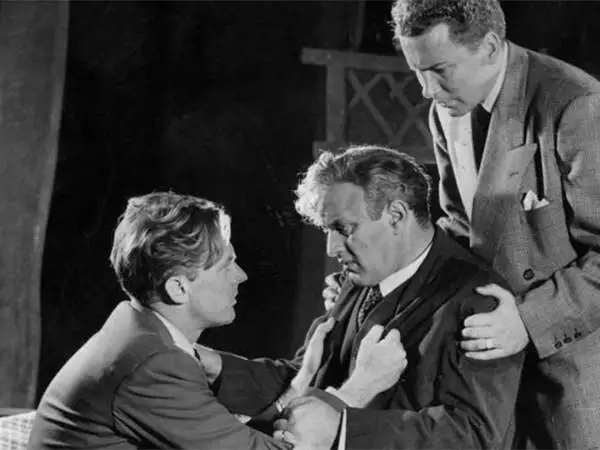
Arthur Miller grew up in New York in a family that once lived comfortably. That comfort disappeared during the Great Depression, and the loss stayed with him. Years later, it shaped Death of a Salesman. When the play opened in 1949, it felt different from what audiences expected. There were no kings, no heroes, no grand victories. There was only a tired man, a shrinking career, and a belief system that had stopped working.
I read the play first as a student. Back then, it felt distant. Later, reading it again, the story felt personal. The pressure to succeed, the fear of falling behind, the quiet panic of becoming invisible—those feelings did not belong to another era. They felt current.
The Story at Its Core
Death of a Salesman follows Willy Loman, a traveling salesman in his sixties, living in Brooklyn with his wife Linda. Willy’s job once gave him pride. Now it gives him anxiety. Sales no longer come easily. Younger workers move faster. His employer loses patience. Willy measures his worth through approval, and that approval keeps slipping away.
The play unfolds over two days, yet time behaves strangely. The present mixes with memories. Willy steps in and out of the past as if it were another room in the house. These shifts are not decorative. They show how Willy survives. Memory becomes shelter when reality feels unbearable.
Willy Loman: A Man Built on Belief
Willy Loman believes success comes from personality rather than skill. Being liked, in his mind, solves everything. For years, that belief helped him push forward. It gave him confidence. It helped him sell. Over time, the belief hardened into something dangerous. When the world changed, Willy did not.
What makes Willy tragic is not failure alone. It is loyalty to an idea that no longer fits reality. He cannot let go. Each rejection feels personal. Each missed sale feels like proof that his life has lost meaning. Willy does not lack effort. He lacks flexibility.
I find it hard to dislike Willy. His mistakes feel human. His fear feels familiar. He wants proof that his life mattered, that his work meant something. That need drives every choice he makes.
also read : – Eros Ramazzotti Top 10 Songs of All Time
Linda Loman: Strength Without Recognition
Linda Loman stands beside Willy throughout the play. She sees his fear long before others do. She understands how deeply his job defines his sense of self. Linda does not argue with Willy’s dream. She protects him from cruelty and defends his dignity.
Some readers describe Linda as passive. I see something else. I see emotional labor. I see someone holding a fragile structure together through patience and restraint. Her most powerful moment comes when she demands attention for Willy’s pain. The room shifts. The audience listens.
Linda knows the truth about Willy’s condition. She chooses care over confrontation. That choice carries weight.
Biff Loman: The Son Who Woke Up
Biff once represented everything Willy admired. He was popular in high school, praised by teachers, admired by peers. His future looked easy. One moment shattered that illusion. During a visit to Boston, Biff discovered his father’s affair. That discovery broke trust and belief at the same time.
After that moment, Biff drifted. He worked different jobs. He stole. He failed. What matters is not the failure but the honesty that followed. Unlike Willy, Biff stops lying to himself. He begins to accept that he is not meant for the dream his father imagined.
Biff’s growth is painful to watch because it requires loss. He lets go of comforting lies. He chooses truth, even when it offers no reward.
Happy Loman: The Dream That Learned Nothing
Happy Loman mirrors Willy more closely than Biff does. He talks big. He exaggerates success. He avoids reflection. Happy chases pleasure and recognition without questioning the cost.
By the end of the play, Happy remains loyal to Willy’s belief system. That loyalty feels unsettling. It suggests repetition. While Willy’s story ends, Happy’s may continue the same pattern. That detail lingers longer than the final scene.
also read : – Mary Magdalene and Mary: Clearing the Confusion, the History, and the Stories That Still Shape Faith
The Plot: Simple Events, Heavy Meaning
The plot itself is straightforward. Willy returns home exhausted. His sons come back to visit. Old hopes resurface. Plans form. In Act One, memory softens the present. In Act Two, reality pushes back. Meetings fail. Truth surfaces. Illusions collapse.
The ending avoids drama. Willy dies believing insurance money will save his family. The funeral that follows is quiet. Few people attend. The applause Willy imagined never arrives. That silence delivers the message more clearly than any speech.
Act One: Memory as Shelter
Act One introduces the emotional rhythm of the play. Willy arrives home worn down. Linda listens. Biff and Happy return, bringing old pride with them. Stories from the past fill the stage. High school victories. Praise from strangers. Easy confidence.
Linda reveals Willy’s private struggle. He feels replaceable. He feels unwanted. The act closes with fragile optimism. Plans form, but nothing feels secure. The audience senses the tension between hope and denial.
Act Two: Reality Pushes Back
Act Two removes comfort. Biff seeks a fresh start through a meeting that collapses quickly. He admits the truth about his life. Willy refuses to accept it. The family dinner falls apart. Memory takes over completely.
Willy makes his final choice believing money will repair everything. The audience knows better. That gap between belief and reality defines the tragedy.
also read : – Jacob Hurley Bongiovi: All You Need to Know About Millie Bobby Brown’s Fiance
Major Themes That Drive the Play
The American Dream
The play questions the promise that effort guarantees success. Willy works hard. He sacrifices time with family. Still, reward never arrives. The dream fails him.
Identity and Work
Willy ties self-worth to employment. When work disappears, identity collapses. The play shows how dangerous that connection can be.
Truth and Illusion
Biff accepts truth. Willy chooses comfort. That choice shapes their outcomes.
Family Expectations
Dreams pass from parent to child. The weight hurts everyone involved.
Aging and Fear
Willy fears replacement. Younger workers move faster. That fear remains current.
Arthur Miller’s Purpose and Impact
Arthur Miller believed tragedy belonged to ordinary people. Kings were not required. Willy lacks power and status, yet his suffering feels universal. That idea changed modern drama. The stage opened to common lives and common fears.
Miller did not soften the story. He did not offer rescue. He trusted the audience to sit with discomfort. That trust gives the play its lasting power.
also read : – John Stamos Net Worth: Get All the Details About John Stamos Here
Language, Structure, and Style
The language stays simple. Words repeat. Phrases echo. Meaning drains with repetition. Silence matters. Pauses carry emotion. The structure mirrors Willy’s mind. Memory interrupts logic. Time bends easily.
Nothing feels decorative. Every technique serves the emotional core.
Quotes That Continue to Matter
“Be liked and you will never want.”
This line defines Willy’s belief system.
“Attention must be paid.”
Linda demands respect for pain.
“I am not a dime a dozen.”
Biff claims worth without status.
These lines survive outside the play because they sound real.
Monologues That Define the Play
Biff’s final confrontation stands out. Truth spills out without comfort. Willy’s inner speeches reveal panic behind confidence. Actors fear these moments because restraint matters more than volume. On stage, timing decides everything.
Film Versions and Adaptations
The 1951 film starred Fredric March. Later television versions reached wider audiences. Stage performance remains the strongest form. Live memory shifts create emotional closeness that reading alone cannot match. Films still help new readers visualize scenes and relationships.
Audiobook and Audio Performances
Audiobook versions bring strong value. Voice acting adds texture to dialogue. I listened once during a long commute. The ending stayed with me all day. The play works well in audio form because conversation drives everything.
also read : – Rod Wave Net Worth: Know All the Details About Rod Wave Here
Why Schools Keep Teaching the Play
Students recognize the pressure. Grades, jobs, expectations feel familiar. Teachers value the honesty. Themes spark discussion. The language stays accessible. The message stays sharp. Time has not dulled it.
Why Death of a Salesman Still Feels Current
Work feels unstable. Metrics rule decisions. Many people fear becoming invisible. Willy felt that fear first. The play reflects modern anxiety without updating a single line. That connection keeps it alive.
Final Thoughts
Death of a Salesman offers no comfort. It offers clarity. Willy’s failure hurts. Biff’s honesty heals a little. I return to the play for that reason. It explains something real about work, pride, and family. That truth lingers long after the final scene fades.
also read : – LL Cool J Net Worth: Know Everything About LL Cool J Here
FAQs: Arthur Miller Death of a Salesman
What is Death of a Salesman about?
It tells the story of Willy Loman, a salesman whose belief in success collapses under reality.
Is Death of a Salesman a tragedy?
Yes. It presents a modern tragic figure whose downfall feels personal and irreversible.
What is the main message of the play?
Blind faith in success myths harms people and families.
Why does Willy choose death?
He believes money equals worth and repair, even when life proves otherwise.
Is Biff the hero of the play?
Biff represents honesty and growth, not victory.
Should readers watch or read the play first?
Reading builds insight. Performance deepens emotional impact.

