


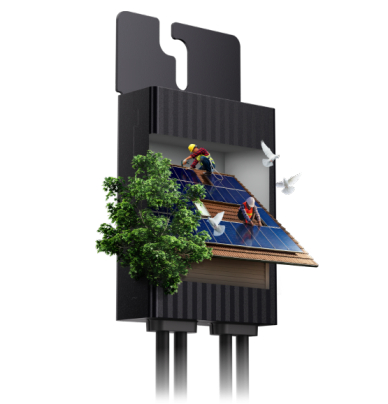
Rooftop arrays rarely receive identical sunlight across every module. A Smart Module Controller can provide module-level optimization and visibility, helping designers address differences caused by roof orientation, shading, and changing operating conditions. Equipment selection is only one decision in a wider infrastructure project. Good procurement balances present requirements with realistic future demand, without paying for capacity that has no defined use. The central design task is to connect the selected equipment with a clear site requirement.
Set realistic expectations for energy yield
Module-level optimization can improve the usable output of an array in suitable conditions, but the result depends on roof geometry, shading, module characteristics, and system design. It should not be presented as a guaranteed percentage increase for every home. A credible estimate uses site-specific assumptions and distinguishes modeled yield from measured operating results.
Work at the module level
A conventional string-level view can hide differences between individual panels. Modules on one roof may receive different sunlight because of orientation, nearby structures, seasonal shadows, or soiling. Module-level power electronics can help manage these variations more precisely, allowing the system designer to consider the performance of each panel rather than treating the whole string as a single uniform source. For a closer look at the solution scope, review Smart Module Controller and consider how its documented functions fit the site layout, electrical interfaces, and operating plan.
Review the complete equipment combination
An optimizer is one part of a PV system, not a standalone solution. Its compatibility with the module, inverter, communication method, mounting arrangement, and local electrical requirements should be checked together. This is particularly important when an existing system is being expanded, because the original equipment may have different operating limits from newer products.
Plan maintenance before the first fault
Routine inspection, cleaning, firmware updates, component replacement, and emergency isolation all require time and access. The maintenance plan should identify who performs each task, what redundancy remains, and which spares must be held locally. A maintainable design is easier to keep reliable over its operating life. Performance should always be assessed against the actual installation conditions and the complete system boundary.
Maximum power point tracking has a practical role
A photovoltaic module’s output changes with irradiance and temperature. Maximum power point tracking continually adjusts the electrical operating point to capture available energy under changing conditions. When this function is applied at module level, the system can respond to differences between panels that would otherwise affect the output of a shared string. A project specification for Smart Module Controller should identify the applicable configuration, installation limits, commissioning checks, and service responsibilities.
Use commissioning to confirm the design
Before the system is handed over, the installer should verify device recognition, communications, string configuration, monitoring visibility, and the operation of supported safety functions. The test record should identify the installed model and firmware where relevant. This creates a baseline against which future performance changes can be assessed.

