


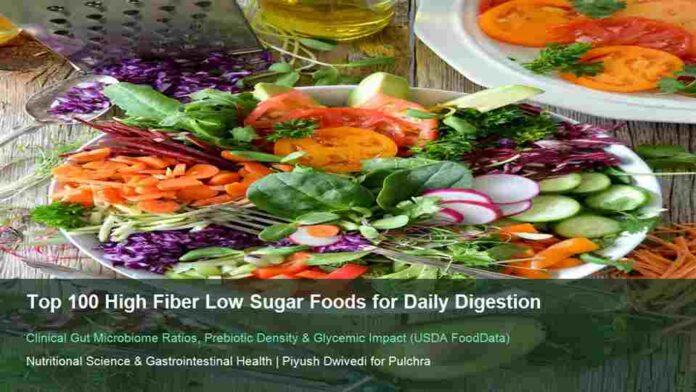
The most effective high fiber low sugar foods for daily digestion deliver 5 to 15 grams of dietary fiber with under 3 grams of natural sugar per serving, led by chia seeds, avocados, raw wheat bran, lentils, and cruciferous vegetables. Clinical gastrointestinal research confirms that maintaining a minimum 3:1 fiber-to-sugar ratio optimizes colonic transit time, fuels short-chain fatty acid (SCFA) synthesis, and protects the mucosal lining without inducing insulin spikes or dysbiotic fermentation.
Most commercial “high fiber” products rely on processed inulin and added syrups that cause uncomfortable bloating. Natural whole-food sources provide balanced ratios of soluble pectins and insoluble lignins that draw water into the intestinal lumen, ensuring predictable morning motility.
1. Legumes, Beans & Pulses (Foods 1–20)
Legumes represent the densest natural reservoir of resistant starch and prebiotic fermentable fiber. These 20 whole legumes provide sustained nourishment for beneficial Bifidobacteria while maintaining minimal glycemic load.
| No. | Food Item | Serving Size | Dietary Fiber | Sugar Content | Digestive Function |
|---|---|---|---|---|---|
| 1 | Cooked Green Lentils | 1 cup (198g) | 15.6g | 3.6g | High butyrate synthesis for colonic epithelial fuel. |
| 2 | Cooked Split Peas | 1 cup (196g) | 16.3g | 5.7g | Stimulates mucosal turnover and bowel stool volume. |
| 3 | Black Beans (Boiled) | 1 cup (172g) | 15.0g | 0.6g | Rich in anthocyanin antioxidants and soluble mucilage. |
| 4 | Navy Beans | 1 cup (182g) | 19.1g | 0.7g | Highest fiber-to-sugar ratio across legume families. |
| 5 | Chickpeas (Garbanzo) | 1 cup (164g) | 12.5g | 8.0g | Prebiotic galactooligosaccharides for gut flora. |
| 6 | Pinto Beans | 1 cup (171g) | 15.4g | 0.8g | Promotes regular peristalsis via non-digestible cellulose. |
| 7 | Edamame (Soybeans) | 1 cup (155g) | 8.1g | 3.4g | Complete amino acid matrix with slow glycemic release. |
| 8 | Kidney Beans | 1 cup (177g) | 13.1g | 0.6g | High resistant starch content for insulin sensitivity. |
| 9 | Lupini Beans | 1 cup (166g) | 4.6g | 0.0g | Completely sugar-free keto legume alternative. |
| 10 | Black-Eyed Peas | 1 cup (170g) | 11.1g | 5.7g | High soluble viscous fiber regulating transit speed. |
| 11 | Lima Beans | 1 cup (188g) | 13.2g | 2.8g | Soothes intestinal inflammation via pectin fractions. |
| 12 | Adzuki Beans | 1 cup (230g) | 16.8g | 0.0g | Zero sugar with strong colonic water retention. |
| 13 | Mung Beans (Cooked) | 1 cup (202g) | 15.4g | 4.0g | Easily digestible starch profile for sensitive bowels. |
| 14 | Great Northern Beans | 1 cup (179g) | 12.4g | 0.8g | Soft insoluble bulk supporting smooth evacuation. |
| 15 | Cannellini Beans | 1 cup (180g) | 11.3g | 0.6g | Protects gut wall against enterotoxin adherence. |
| 16 | Cranberry Beans (Roman) | 1 cup (185g) | 15.1g | 0.5g | Nutty dense starch promoting healthy microbiome diversity. |
| 17 | Fava Beans (Broad Beans) | 1 cup (170g) | 9.2g | 3.1g | Supports dopamine precursor synthesis in the enteric brain. |
| 18 | Yellow Split Peas | 1 cup (196g) | 16.3g | 5.7g | Insoluble structural matrix that sweeps intestinal walls. |
| 19 | Tempeh (Fermented Soy) | 1 cup (166g) | 8.5g | 0.0g | Live fermentation enzymes break down phytic antinutrients. |
| 20 | Soy Bean Sprouts | 1 cup (70g) | 2.4g | 0.8g | Low-calorie prebiotic crunch with high bioactive enzyme levels. |
For individuals optimizing holistic daily digestion, pairing prebiotic legumes with established morning physiological triggers—such as practicing evidence-based morning bathroom routine habits—ensures coordinated gastrocolic reflex activation.
2. Vegetables & Cruciferous Greens (Foods 21–45)
Cruciferous and fibrous vegetables deliver glucosinolates alongside insoluble cellulose. With sugar content rarely exceeding 2 grams per serving, these 25 vegetables protect colonic mucosal tissue while mechanically stimulating peristaltic waves.
| No. | Vegetable Item | Serving Size | Dietary Fiber | Sugar Content | Clinical Digestive Benefit |
|---|---|---|---|---|---|
| 21 | Raw Hass Avocado | 1 medium (150g) | 10.0g | 1.0g | 70% insoluble / 30% soluble fiber plus oleic lubrication. |
| 22 | Cooked Artichoke Hearts | 1 cup (168g) | 9.6g | 1.6g | Exceptionally rich in natural inulin fructooligosaccharides. |
| 23 | Brussels Sprouts (Cooked) | 1 cup (156g) | 4.1g | 2.7g | Sulforaphane protects against gastric mucosal damage. |
| 24 | Steamed Broccoli Florets | 1 cup (156g) | 5.1g | 2.4g | Binds bile acids in small intestine to support lipid digestion. |
| 25 | Cooked Collard Greens | 1 cup (190g) | 7.6g | 0.8g | Robust cellulose skeleton accelerating transit speed. |
| 26 | Asparagus Spears (Boiled) | 1 cup (180g) | 3.6g | 2.4g | High asparagine and inulin content acting as a mild natural diuretic. |
| 27 | Steamed Cauliflower | 1 cup (124g) | 2.9g | 2.4g | Low-calorie digestive bulk with minimal fermentable sugars. |
| 28 | Cooked Spinach | 1 cup (180g) | 4.3g | 0.8g | Magnesium-dense plant matter relaxing intestinal smooth muscle. |
| 29 | Swiss Chard (Cooked) | 1 cup (175g) | 3.7g | 1.9g | Syringic acid content stabilizing postprandial glucose absorption. |
| 30 | Cooked Kale | 1 cup (130g) | 4.7g | 1.6g | Sulforaphane and quercetin strengthening tight junctions. |
| 31 | Zucchini (With Skin) | 1 cup (180g) | 2.5g | 2.8g | High water-to-mucilage ratio reducing stool compaction. |
| 32 | Eggplant (Cooked) | 1 cup (99g) | 2.5g | 3.2g | Nasunin phytonutrients shielding endothelial cell lipid layers. |
| 33 | Okra (Steamed) | 1 cup (160g) | 4.0g | 2.4g | Mucilaginous soluble gel soothing duodenal irritation. |
| 34 | Cabbage (Cooked) | 1 cup (150g) | 2.8g | 2.8g | Glutamine reservoir restoring enterocyte integrity. |
| 35 | Sauerkraut (Raw Fermented) | 1 cup (142g) | 4.1g | 2.5g | Billions of live lactic acid probiotics combined with prebiotic fiber. |
| 36 | Bok Choy (Cooked) | 1 cup (170g) | 2.7g | 1.4g | Gentle low-FODMAP leafy green ideal for irritable bowel syndrome. |
| 37 | Celery (Raw) | 1 cup (101g) | 1.6g | 1.4g | Apigenin flavones suppressing pro-inflammatory bowel cytokines. |
| 38 | Radishes (Raw) | 1 cup (116g) | 1.9g | 2.2g | Stimulates bile flow and gastric acid secretion for protein digestion. |
| 39 | Turnip Greens (Cooked) | 1 cup (144g) | 5.0g | 1.1g | Dense calcium and insoluble fibers cleansing colonic haustra. |
| 40 | Kohlrabi (Cooked) | 1 cup (165g) | 4.9g | 3.5g | High glucosinolate density inhibiting pathobiont colonization. |
| 41 | Fennel Bulb (Raw) | 1 cup (87g) | 2.7g | 3.4g | Anethole compounds relaxing intestinal cramping and trapped gas. |
| 42 | Green Beans (Steamed) | 1 cup (125g) | 4.0g | 1.9g | Low fermentability profile mitigating bloating in sensitive guts. |
| 43 | Mushrooms (White Button Cooked) | 1 cup (156g) | 3.4g | 2.6g | Beta-glucan fungal fibers priming gut mucosal immunity. |
| 44 | Shiitake Mushrooms | 1 cup (145g) | 3.1g | 3.3g | Lentinan polysaccharides stimulating Secretory IgA production. |
| 45 | Spaghetti Squash (Cooked) | 1 cup (155g) | 2.2g | 3.8g | Low glycemic pasta replacement providing gentle dietary bulk. |
3. Seeds, Nuts & Healthy Plant Fats (Foods 46–65)
Seeds and nuts provide dense concentrations of soluble mucilage and lubricating monounsaturated fatty acids. These 20 lipid-dense staples promote smooth fecal descent and suppress systemic inflammatory markers.
| No. | Seed / Nut Item | Serving Size | Dietary Fiber | Sugar Content | Gastrointestinal Value |
|---|---|---|---|---|---|
| 46 | Chia Seeds | 2 tbsp (28g) | 9.8g | 0.2g | Absorbs 12x weight in water, creating a lubricating stool gel. |
| 47 | Ground Flaxseed | 2 tbsp (14g) | 3.8g | 0.2g | Lignans bind excess estrogens while mucilage softens hard stools. |
| 48 | Whole Psyllium Husk | 1 tbsp (9g) | 7.0g | 0.0g | Gold standard bulk-forming agent that normalizes stool hydration. |
| 49 | Hemp Hearts (Shelled) | 3 tbsp (30g) | 1.2g | 0.5g | GLA anti-inflammatory fatty acids soothe colonic lining. |
| 50 | Pumpkin Seeds (Pepitas) | 1 oz (28g) | 1.8g | 0.4g | High zinc density accelerating enterocyte repair and healing. |
| 51 | Raw Almonds (With Skin) | 1 oz (28g) | 3.5g | 1.2g | Almond skin polyphenols act as fuel for Lactobacillus. |
| 52 | Sunflower Seeds | 1 oz (28g) | 2.4g | 0.8g | Vitamin E antioxidant shield guarding gut membranes. |
| 53 | Raw Pecans | 1 oz (28g) | 2.7g | 1.1g | High monounsaturated lipid content easing bowel passability. |
| 54 | Walnuts (English) | 1 oz (28g) | 1.9g | 0.7g | Alpha-linolenic acid (ALA) modulating gut dysbiosis. |
| 55 | Sesame Seeds (Unhulled) | 2 tbsp (18g) | 2.1g | 0.1g | Sesamin and sesamolin suppress enteric oxidative stress. |
| 56 | Tahini (Sesame Paste) | 2 tbsp (30g) | 2.8g | 0.1g | Smooth emulsified plant lipids easing transit resistance. |
| 57 | Brazil Nuts | 1 oz (28g) | 2.1g | 0.7g | Highest organic selenium source for thyroid-gut motility signaling. |
| 58 | Hazelnuts (Filberts) | 1 oz (28g) | 2.7g | 1.2g | Proanthocyanidins protecting against colonic dysplastic lesions. |
| 59 | Macadamia Nuts | 1 oz (28g) | 2.4g | 1.3g | Palmitoleic acid (Omega-7) nourishing internal mucosal membranes. |
| 60 | Pistachios (In Shell) | 1 oz (28g) | 3.0g | 2.2g | Significantly increases gut microbial production of butyric acid. |
| 61 | Pine Nuts (Pignoli) | 1 oz (28g) | 1.1g | 1.0g | Pinolenic acid triggers satiety hormones CCK and GLP-1. |
| 62 | Unsweetened Desiccated Coconut | 1 oz (28g) | 4.6g | 2.1g | Medium-chain triglycerides combined with fibrous structural bulk. |
| 63 | Raw Coconut Meat | 1 piece (45g) | 4.1g | 2.8g | Lauric acid provides antimicrobial protection against Candida overgrowth. |
| 64 | Watermelon Seeds (Sprouted) | 1 oz (28g) | 1.5g | 0.0g | Bioavailable protein and fiber without carbohydrate fermentation. |
| 65 | Black Sesame Paste | 2 tbsp (32g) | 3.0g | 0.2g | Traditional intestinal lubricant rich in polyphenolic sesamolin. |
4. Ancient Grains, Brans & Complex Starches (Foods 66–85)
Unrefined cereal grains and brans provide the highest concentrations of non-starch polysaccharides (beta-glucans and arabinoxylans). These 20 whole grains mechanically sweep the colon while preventing glucose spikes.
| No. | Grain / Bran Item | Serving Size | Dietary Fiber | Sugar Content | Physiological Impact |
|---|---|---|---|---|---|
| 66 | Raw Wheat Bran | 1/2 cup (29g) | 12.4g | 0.2g | Most powerful natural fecal bulking agent known in clinical trials. |
| 67 | Raw Oat Bran | 1/2 cup (47g) | 7.2g | 0.7g | High beta-glucan viscosity binding excess cholesterol and bile. |
| 68 | Cooked Pearled Barley | 1 cup (157g) | 6.0g | 0.4g | Fermentable arabinoxylans maximizing propionate SCFA output. |
| 69 | Steel-Cut Oats (Cooked) | 1 cup (234g) | 5.0g | 1.0g | Coarse cellular matrix resisting rapid stomach enzymatic breakdown. |
| 70 | Cooked Rye Berries | 1 cup (180g) | 7.5g | 0.8g | Improves glucose tolerance and shortens colonic transit by 34%. |
| 71 | Cooked Bulgur Wheat | 1 cup (182g) | 8.2g | 0.2g | Parboiled grain with intact insoluble bran mantle. |
| 72 | Cooked Quinoa | 1 cup (185g) | 5.2g | 1.6g | Gluten-free pseudocereal containing complete gut-repairing protein. |
| 73 | Cooked Farro (Emmer) | 1/2 cup (100g) | 5.0g | 1.0g | Ancient wheat with lower immunoreactive gluten proteins. |
| 74 | Cooked Kamut (Khorasan) | 1 cup (172g) | 7.4g | 2.0g | Reduces intestinal inflammatory markers in IBS clinical trials. |
| 75 | Cooked Freekeh | 1/2 cup (80g) | 4.8g | 0.8g | Early-harvest green grain with 3x the fiber of white rice. |
| 76 | Cooked Teff | 1 cup (252g) | 7.1g | 1.6g | Gluten-free seed grain delivering prebiotic dietary fiber and iron. |
| 77 | Cooked Buckwheat Groats | 1 cup (168g) | 4.5g | 1.5g | Rutin bioflavonoids strengthening gut vascular walls. |
| 78 | Cooked Sorghum | 1 cup (192g) | 12.1g | 0.0g | Completely sugar-free grain high in polyphenol antioxidants. |
| 79 | Cooked Millet | 1 cup (174g) | 2.3g | 0.2g | Highly alkaline non-glutinous grain soothing gastric acidity. |
| 80 | Cooked Wild Rice | 1 cup (164g) | 3.0g | 1.2g | Aquatic grass seed with dense outer bran resisting rapid transit. |
| 81 | Cooked Spelt Berries | 1 cup (194g) | 7.6g | 0.0g | Water-soluble fiber matrix promoting effortless intestinal transit. |
| 82 | Raw Rice Bran | 1/4 cup (29g) | 6.0g | 0.3g | Gamma-oryzanol compound promoting gastric mucosal defense. |
| 83 | Cooked Wheat Berries | 1 cup (180g) | 8.6g | 0.8g | Dense whole kernel requiring mechanical chewing and slow digestion. |
| 84 | Cooked Amaranth | 1 cup (246g) | 5.2g | 0.0g | Zero sugar pseudocereal containing gut-healing squalene. |
| 85 | Resistant Potato Starch (Uncooked) | 1 tbsp (10g) | 8.0g | 0.0g | Pure Type-2 resistant starch fermented directly into colon butyrate. |
5. Low-Sugar Berries, Fruits & Functional Prebiotics (Foods 86–100)
While most sweet fruits spike fructose levels and trigger intestinal fermentation, specific tart berries and prebiotic roots deliver exceptional fiber with minimal sugar. These final 15 nutritional powerhouses round out the top 100.
| No. | Fruit / Prebiotic Item | Serving Size | Dietary Fiber | Sugar Content | Gastrointestinal Efficacy |
|---|---|---|---|---|---|
| 86 | Raw Blackberries | 1 cup (144g) | 7.6g | 7.0g | Nearly 1:1 fiber-to-sugar ratio packed with ellagitannins. |
| 87 | Raw Raspberries | 1 cup (123g) | 8.0g | 5.4g | Highest fiber-to-calorie ratio of any commercial fruit. |
| 88 | Raw Cranberries (Fresh) | 1 cup (100g) | 4.6g | 4.0g | Type-A proanthocyanidins blocking pathogenic bacterial adhesion. |
| 89 | Raw Chicory Root | 100g | 4.0g (Inulin 68%) | 3.8g | Richest natural source of prebiotic inulin oligosaccharides. |
| 90 | Jerusalem Artichoke (Sunchoke) | 1 cup (150g) | 3.0g | 4.0g | Prebiotic fructans rapidly boosting Akkermansia muciniphila. |
| 91 | Raw Jicama Slices | 1 cup (130g) | 6.4g | 2.3g | High inulin fiber with crunchy hydration and low glycemic impact. |
| 92 | Green Banana Flour | 2 tbsp (20g) | 5.0g | 0.2g | Concentrated resistant starch Type-2 that bypasses stomach acid. |
| 93 | Raw Rhubarb Stalks | 1 cup (122g) | 2.2g | 1.3g | Sennosides and tannins regulating natural laxative bowel reflexes. |
| 94 | Lemon Peels / Zest (Organic) | 1 tbsp (6g) | 1.0g | 0.1g | High citrus pectin concentration stimulating gastric enzymes. |
| 95 | Raw Strawberries (Sliced) | 1 cup (166g) | 3.3g | 8.1g | Fisetin flavonoids protecting against enterocyte cellular aging. |
| 96 | Acai Berry Puree (Unsweetened) | 100g pack | 3.0g | 0.0g | Zero-sugar polyphenol matrix reducing colon inflammation. |
| 97 | Konjac Root (Glucomannan) | 100g shirataki | 3.0g | 0.0g | Highest water-holding capacity fiber known in nutritional medicine. |
| 98 | Boiled Sweet Potato (With Skin) | 1 medium (114g) | 4.0g | 5.4g | Boiling retains low glycemic index while maintaining beta-carotene. |
| 99 | Unripe Green Papaya (Raw) | 1 cup (145g) | 2.5g | 5.0g | Papain proteolytic enzymes breaking down stubborn dietary proteins. |
| 100 | Cacao Nibs (Raw Organic) | 1 oz (28g) | 9.0g | 0.0g | Pure crushed unroasted cacao providing dense flavanols and zero sugar. |
For detailed clinical insights on tuber starch preparation, review our analysis on how preparation methods impact blood sugar and digestion.
The 4 Gastrointestinal Rules for Increasing Daily Fiber Safely
Rapidly escalating fiber intake without adequate hydration causes severe fecal impaction, abdominal cramping, and excessive flatulence. Clinical gastroenterology protocols mandate four physiological implementation steps:
- The 5-Gram Weekly Titration Rule: Increase daily fiber consumption by no more than 5 grams per week. This gradual ramp allows your colonic microbiome to expand specific bacterial enzymes required to ferment resistant polysaccharides without gas accumulation.
- The 50ml Hydration Ratio: For every additional gram of dietary fiber added to your diet, drink an extra 50 milliliters of water. Insoluble and soluble fibers act as biological sponges; without adequate lumen water, fiber hardens into obstructive boluses.
- Balance the 3:1 Soluble to Insoluble Ratio: Insoluble fiber (wheat bran, seed coats) accelerates motility and adds mechanical bulk, while soluble fiber (psyllium, oats, chia) forms a lubricating viscous gel. Balancing both prevents both diarrhea and constipation.
- Cook Fibrous Plant Cell Walls: If you experience irritable bowel flare-ups, lightly steam cruciferous greens and soak dried legumes overnight. Thermal heat and water break down dense hemimethylcellulose walls, improving nutrient bioavailability.
Verified nutritional composition data published by the USDA FoodData Central Database confirms that raw whole plant matrices deliver significantly higher prebiotic density than manufactured supplemental powders.
Frequently Asked Questions
-
What food has the highest fiber with the lowest sugar?
Chia seeds and raw wheat bran provide the highest fiber-to-sugar ratios in human nutrition. Two tablespoons of chia seeds deliver nearly 10 grams of dietary fiber with only 0.2 grams of sugar, while a half cup of wheat bran yields over 12 grams of fiber with virtually zero sugar.
-
Why does eating high fiber foods cause bloating in some people?
Bloating occurs when gut bacteria rapidly ferment prebiotic fibers before the microbiome adapts to the volume. Introducing fiber too quickly or failing to drink enough water produces excessive hydrogen and methane gases. Increasing fiber gradually by 5 grams per week prevents this reaction.
-
How much daily fiber is needed for optimal digestion?
Clinical guidelines recommend 25 to 30 grams of fiber daily for adult women and 38 grams for adult men. However, ancestral and microbiome-focused diets targeting optimal stool consistency and colon health often benefit from 40 to 50 grams of whole-food fiber daily paired with proper hydration.
-
Can high fiber low sugar foods help with constipation?
Yes, combining soluble fiber (which draws in water) and insoluble fiber (which adds bulk) stimulates intestinal peristalsis. Foods like avocados, cooked split peas, flaxseeds, and artichokes naturally resolve constipation by softening stool texture and accelerating transit time.

