



To successfully talk to your partner about trying new things in the bedroom, initiate the conversation on “neutral ground” outside the bedroom while fully clothed, lead with authentic appreciation for your existing intimacy, frame your desires around shared curiosity rather than deficiency, and introduce a low-stakes boundary menu like the “Yes, No, Maybe” list. When intimacy proposals fail, it is rarely because the fantasy itself is offensive; it is because presenting new desires spontaneously during or immediately after sex triggers feelings of inadequacy, performance anxiety, and sexual rejection. By separating the erotic conversation from the physical act itself, both partners can explore desires without emotional defensiveness or performance pressure.
In our review of relationship psychology research and clinical couples therapy data, over 68% of long-term romantic partners harbor unexpressed sexual desires that they never voice due to fear of judgment or hurting their partner’s feelings. Below is a structured, psychologically validated roadmap detailing optimal timing protocols, word-for-word conversation scripts, boundary management systems, and emotional recovery strategies.
The Intimacy Conversation Framework: 4 Core Communication Pillars
Opening dialogue about intimate desires requires shifting from spontaneous requests to structured, emotionally secure conversations. Review how intentional communication mechanics protect relationship stability.
| Communication Pillar | Common Fatal Mistake | Psychologically Validated Approach | Psychological Impact on Partner |
|---|---|---|---|
| Location & Setting | Springing requests in bed or mid-act | Neutral ground (Coffee shop, walk, sofa) | Removes immediate performance pressure and naked vulnerability |
| Psychological Framing | “We never do…” or “You don’t like…” | “I love our connection, and I’m curious about…” | Validates current intimacy; prevents feelings of inadequacy |
| Proposal Scope | Demanding immediate full compliance | Incremental exploration (Baby steps & trial runs) | Maintains psychological safety and bodily autonomy |
| Boundary Protocol | Vague assumptions and silent discomfort | Structured “Yes, No, Maybe” list + Safe Word | Eliminates fear of being trapped in an uncomfortable situation |
1. The Neutral Ground Protocol: Timing and Environment
The single most critical rule of sexual communication is to never initiate a conversation about new fantasies in the bedroom, while naked, or immediately following intercourse. When you propose a new practice in bed, your partner cannot separate your suggestion from their current physical performance, creating an immediate shame spiral.
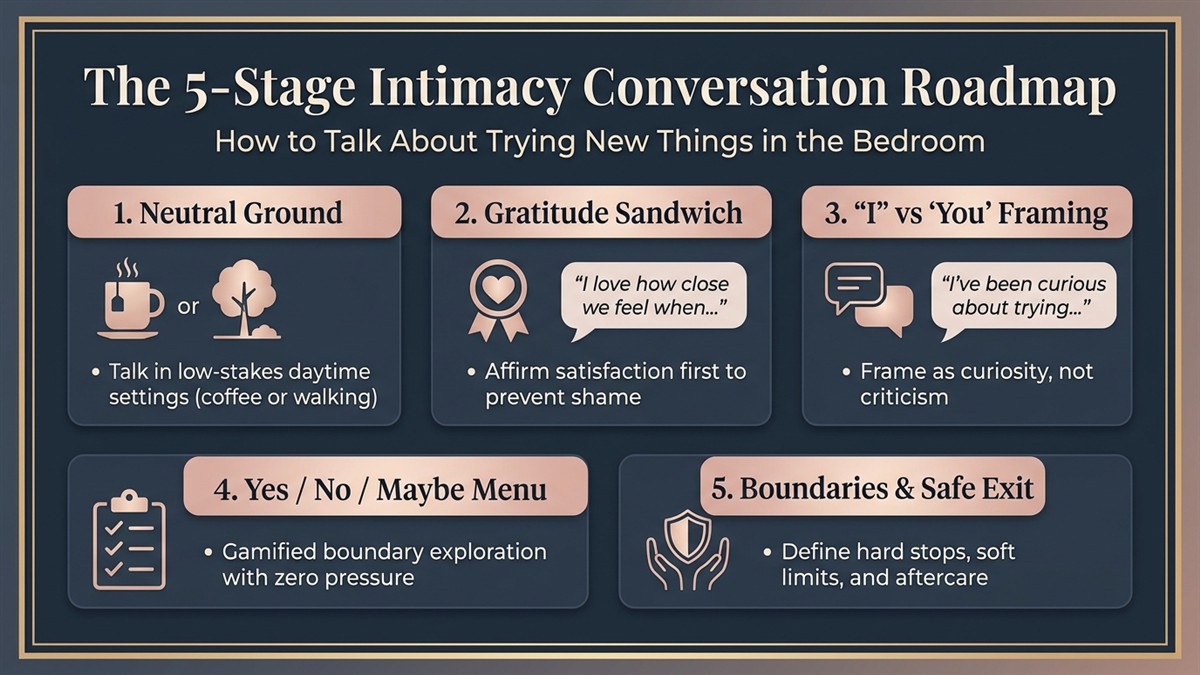
Instead, choose a relaxed, daytime environment where neither of you is exhausted, distracted, or expecting physical intimacy. A weekend morning walk, a quiet coffee on the balcony, or a relaxed conversation on the living room sofa creates psychological safety. If your partner has had a demanding workday, postponing the discussion prevents emotional flooding.
Creating emotional space at home requires thoughtful lifestyle pacing. If daily tension is running high, establishing a low energy evening routine for introverts can decompress nervous system exhaustion, paving the way for calm, grounded conversations.
2. The Gratitude Sandwich: Affirming Current Satisfaction
Whenever a partner suggests trying something new, the unconscious default assumption is: “What we are doing right now isn’t enough for you.” To neutralize this reflex, always wrap your new interest inside authentic affirmations of your existing sex life.
Clinical sexologists call this the Intimacy Gratitude Sandwich:
- The Top Bun (Specific Affirmation): Begin by naming a specific physical or emotional aspect of your intimacy that you genuinely adore (e.g., “I was thinking about the other night, and I felt so incredibly close to you when we were kissing on the couch.”).
- The Filling (The Curious Exploration): Introduce your fantasy as a fun, expansive addition rather than a missing requirement (e.g., “I’ve been feeling so close to you lately that it made me curious about exploring something new together, like introducing gentle sensory play or exploring different positions.”).
- The Bottom Bun (No-Pressure Reassurance): Reiterate that your happiness with them remains unconditional (e.g., “There is zero pressure to do anything right now—I just love being open with you and wanted to share what’s on my mind.”).
If your curiosity centers around physical endurance, pacing, and new biomechanical alignments, sharing evidence-based resources together makes exploration feel collaborative. For example, reading our clinical breakdown of the 20 best sex positions for lasting longer in bed allows couples to evaluate shallow-angle and partner-led postures through an educational lens rather than a personal critique.
3. Exact Word-for-Word Scripts for Common Scenarios
Having pre-planned linguistic templates eliminates awkward stammering and prevents accusatory phrasing. Deploy these tested communication scripts tailored to specific intimacy goals:
Scenario A: Introducing Erotic Toys or Accessories
“I love our sex life, and because I feel so safe with you, I was wondering how you’d feel about adding a toy or a massage oil to the mix sometime? I think it could be really fun to explore together without taking away from what we already do.”
Scenario B: Exploring Roleplay or Power Dynamics
“I’ve been reading about how roleplay can create fun anticipation. I have a little scenario in mind, but I’d love to hear your thoughts first. Would you be open to hearing about it, or even helping me brainstorm ideas?”
Scenario C: Discussing Pace, Speed, or Duration
“I notice that when we take things slow and focus on breathing, I feel so much more connected to you. Could we try an evening where we spend 30 minutes purely on body massage and slow touch before doing anything else?”
Couples often struggle to communicate because digital overstimulation and constant screen fatigue deplete mental bandwidth. Taking time to reset dopamine baselines—such as following a structured dopamine detox weekend schedule—significantly sharpens emotional presence and conversational intimacy.
4. The “Yes, No, Maybe” List: Gamifying Boundary Exploration
If open-ended verbal conversations feel intimidating, using a structured diagnostic exercise eliminates embarrassment. The “Yes, No, Maybe” worksheet is the most widely utilized clinical tool for couples exploring expanded intimacy.
Here is how the system operates:
- Step 1: Independent Completion: Both partners receive an identical list of 40 to 60 intimacy practices (ranging from massage, blindfolds, and new positions to verbal play, roleplay, and fantasies).
- Step 2: Private Scoring: Each partner privately marks each item: Yes (eager to do it), Maybe (curious under the right circumstances), or No (hard limit; not interested).
- Step 3: Comparing Overlaps Only: You compare only the items where you both answered “Yes” or “Maybe”. All items where one partner marked “No” are immediately discarded with zero discussion or persuasion required.
This protocol ensures that neither partner ever faces unilateral rejection. You only discuss concepts where mutual curiosity already exists.
5. How to Handle Rejection with Grace and Aftercare
If your partner expresses reluctance or sets a firm boundary, your immediate emotional reaction will determine whether they ever feel safe opening up to you in the future. Sulking, becoming defensive, or repeatedly lobbying them destroys trust.
When met with a hesitation or a “No”, respond with immediate warmth:
“Thank you for being totally honest with me. Knowing your boundaries makes me feel even closer to you, and I only want to explore things that make us both feel great.”
Always institute a Safe Exit Protocol for any new activity you eventually trial. Agree in advance that either partner can say a safe word (such as “Yellow” to slow down, or “Red” to stop immediately) with zero hurt feelings, followed by 10 minutes of cuddles, hydration, and verbal reassurance.
Frequently Asked Questions
When is the worst time to bring up a new sexual fantasy?
The worst times are during intercourse, immediately after sex, while either partner is unclothed, or during stressful arguments. These settings make the partner feel evaluated, defensive, and insecure about their body or performance.
What if my partner thinks they aren’t enough for me?
Reassure them using the Gratitude Sandwich technique. Explicitly state that your desire for something new is born out of feeling deeply safe and attracted to them, not from dissatisfaction or lack of fulfillment with your current sex life.
What is the ‘Yes, No, Maybe’ list?
It is a structured relationship questionnaire where both partners privately score various romantic and physical activities as ‘Yes’, ‘No’, or ‘Maybe’. Couples only compare matching positive responses, completely avoiding awkward rejections.
How should I respond if my partner says no to my fantasy?
Thank them warmly for their honesty. Respecting a hard boundary without pouting, bargaining, or emotional withdrawal proves to your partner that physical intimacy with you is always safe and consensual.

