


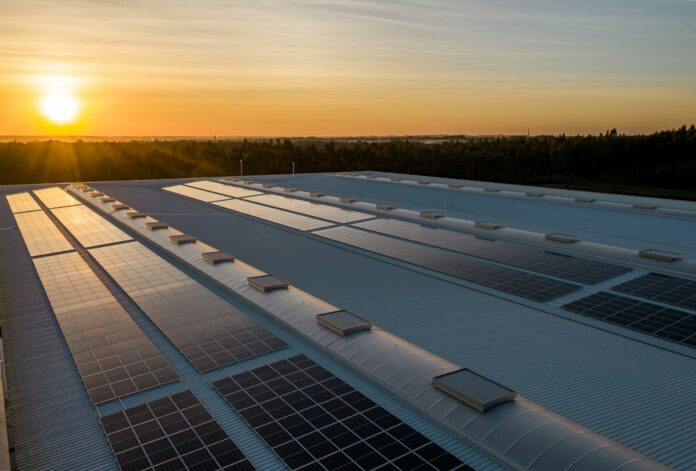
Surging electricity tariffs and recurring peak-hour grid surcharges have prompted millions of homeowners across India to adopt residential rooftop solar systems. To accelerate clean energy adoption and provide up to 300 units of free monthly power, the Government of India launched the landmark **PM Surya Ghar: Muft Bijli Yojana** with an outlay of ₹75,021 crore.
Under the updated 2026 framework, households can claim direct bank transfer (DBT) subsidies of up to **₹78,000** from the Central Government, alongside additional state-level top-up incentives in participating states.
Whether you plan to install a compact 1 kW setup or a larger 3 kW to 5 kW on-grid array with bidirectional net metering, understanding your exact net investment, expected payback timeline, and the step-by-step online registration process is essential before booking a vendor.
—
1. Central Government Solar Subsidy Structure (2026 Slabs)
The Central Financial Assistance (CFA) subsidy operates on a progressive capacity slab structure. The Ministry of New and Renewable Energy (MNRE) directly deposits the subsidy into the applicant’s Aadhaar-seeded bank account within 30 days of post-installation inspection and net meter commissioning.
Official Central Subsidy Slabs:
* **1 kW System:** **₹30,000 flat subsidy** (Recommended for households consuming up to 150 units/month). * **2 kW System:** **₹60,000 flat subsidy** (₹30,000 for the first kW + ₹30,000 for the second kW). * **3 kW System & Above:** **₹78,000 maximum capped subsidy** (₹60,000 for first 2 kW + ₹18,000 for the 3rd kW). * **Residential Welfare Associations (RWA) / Group Housing:** **₹18,000 per kW** for common facilities (lighting, water pumps, lifts), capped at 500 kW total capacity.**Important Subsidy Cap Rule:** For residential installations larger than 3 kW (e.g., 4 kW, 5 kW, or 10 kW), the central subsidy remains capped at a maximum of ₹78,000. However, higher capacities generate greater surplus units that offset heavy commercial or multi-story power bills.
—
2. 2026 Solar Rooftop Cost & Savings Calculator
To evaluate your return on investment (ROI), compare benchmark vendor installation costs against the central subsidy and your estimated annual electricity savings.
| System Capacity | Required Roof Area | Benchmark Gross Cost | Central DBT Subsidy | Net Out-of-Pocket Cost | Avg. Monthly Generation | Estimated Payback Period |
|---|---|---|---|---|---|---|
| **1 kW On-Grid** | 100 – 120 sq. ft. | ₹55,000 – ₹65,000 | ₹30,000 | **₹25,000 – ₹35,000** | 120 – 140 Units | 2.5 to 3.0 Years |
| **2 kW On-Grid** | 200 – 240 sq. ft. | ₹1,10,000 – ₹1,25,000 | ₹60,000 | **₹50,000 – ₹65,000** | 240 – 280 Units | 3.0 to 3.5 Years |
| **3 kW On-Grid** *(Sweet Spot)* | 300 – 350 sq. ft. | ₹1,65,000 – ₹1,90,000 | ₹78,000 | **₹87,000 – ₹1,12,000** | 360 – 420 Units | 3.2 to 3.8 Years |
| **4 kW On-Grid** | 400 – 450 sq. ft. | ₹2,20,000 – ₹2,50,000 | ₹78,000 | **₹1,42,000 – ₹1,72,000** | 480 – 550 Units | 4.0 to 4.5 Years |
| **5 kW On-Grid** | 500 – 600 sq. ft. | ₹2,75,000 – ₹3,10,000 | ₹78,000 | **₹1,97,000 – ₹2,32,000** | 600 – 700 Units | 4.2 to 4.8 Years |
*Note: Calculations reflect monocrystalline half-cut solar panels and BIS-certified on-grid string inverters. Actual turnkey costs vary slightly by state taxes and roof mounting structure height.*
—
3. Video Walkthrough: PM Surya Ghar Online Registration & Portal Guide
Watch this step-by-step visual tutorial demonstrating how to register your consumer account, submit discom clearance, and upload bank details on the national solar portal:
—
4. State Top-Up Subsidies: Additional Financial Relief
Several state governments offer supplementary subsidies on top of the Central ₹78,000 grant, drastically lowering consumer out-of-pocket costs:
1. **Uttar Pradesh (UPNEDA):** Grants an additional state top-up of ₹15,000 per kW up to a maximum of ₹30,000. A 3 kW setup in Uttar Pradesh receives a combined subsidy of **₹1,08,000** (₹78,000 Central + ₹30,000 State).
2. **Delhi (Solar Policy):** Offers generation-based incentives (GBI) of ₹3 per unit of solar power generated, credited directly on electricity bills for 5 years.
3. **Gujarat & Maharashtra:** Provide expedited net-metering fast tracks and concessional collateral-free bank loans through nationalized partner banks (SBI, PNB, Canara Bank) at interest rates starting at 7% per annum.
—
5. Step-by-Step Online Application Process (pmsuryaghar.gov.in)
The entire registration, feasibility assessment, vendor assignment, and subsidy claim workflow operates through a single digital window on the National Portal.
Phase 1: Consumer Registration
1. Navigate to the official portal: pmsuryaghar.gov.in and click **”Apply for Rooftop Solar”**. 2. Select your **State**, electricity distribution company (**DISCOM**), and enter your **Electricity Consumer Account Number** (printed on your monthly electricity bill). 3. Validate your account with your active mobile number and email ID.Phase 2: Technical Feasibility Approval
4. Enter your sanctioned electrical load and the requested solar plant capacity (e.g., 3 kW). 5. Your local DISCOM conducts online technical feasibility review. Approval typically arrives within 5 to 10 working days.Phase 3: Installation & Net Metering
6. Select a registered, empaneled vendor listed on the portal. Ensure your agreement mandates DCR (Domestic Content Requirement) solar modules to remain eligible for subsidy. 7. Once installation concludes, the vendor submits plant specifications and commissioning reports. 8. DISCOM engineers inspect the rooftop array, replace your traditional meter with a bidirectional net meter, and generate a **Commissioning Certificate**.Phase 4: Direct Subsidy Credit (DBT)
9. Log back into the national portal and submit your bank account details alongside a cancelled cheque copy. 10. The Central Government transfers the subsidy directly into your bank account within 30 days of certificate approval.—
6. How Net Metering Multiplies Long-Term ROI
An on-grid solar plant connects directly to your local power utility grid without expensive battery storage packs. On bright sunny days when your panels generate more electricity than your household consumes:
* **Surplus Power Export:** Excess units automatically feed back into the DISCOM utility grid through the bidirectional net meter. * **Nighttime Import Credit:** During evening hours or cloudy monsoon days, you draw power from the regular grid. * **Net Billing Calculation:** At the end of the monthly billing cycle, your DISCOM bills you solely for the **net units consumed** (Imported Units minus Exported Units). If net generation is positive, credits roll over to subsequent billing cycles.
To plan a resilient energy backup system alongside clean generation, review our practical analysis on Building a Sound Plan Around Solar Battery Storage Systems. Furthermore, if you manage household energy efficiency alongside business compliance, explore our legal and institutional frameworks on What Kind of Lawyer Do I Need to Sue a Company? and What Does an Intellectual Property Lawyer Do Day to Day?.
—
Frequently Asked Questions
What is the maximum subsidy under PM Surya Ghar Yojana?
For individual residential homes, the Central Government subsidy is capped at ₹78,000 for system capacities of 3 kW and higher. Residents in states with local top-ups (such as Uttar Pradesh) can receive up to ₹1,08,000 in combined subsidies.
How much roof space is required for a 3 kW solar rooftop system?
A standard 3 kW residential solar setup utilizing high-efficiency monocrystalline panels requires approximately 300 to 350 square feet of shadow-free rooftop area.
Can I install a rooftop solar system if I live in a rented house?
To claim the government subsidy and receive DISCOM net metering approval, you must hold legal ownership of the property or obtain an explicit, notarized No Objection Certificate (NOC) from the property owner whose name matches the electricity consumer connection.
How long do residential solar panels and inverters last?
Tier-1 solar panels carry a 25-year performance warranty, guaranteeing at least 80% to 85% energy efficiency after two and a half decades. On-grid string inverters typically come with a 5 to 10-year warranty and are easily serviceable.
Is a collateral-free bank loan available for solar rooftop installation?
Yes. Nationalized banks including State Bank of India (SBI), Bank of Baroda, and Punjab National Bank offer collateral-free solar loans for installations up to 3 kW at attractive interest rates around 7% per annum under the PM Surya Ghar scheme.

