


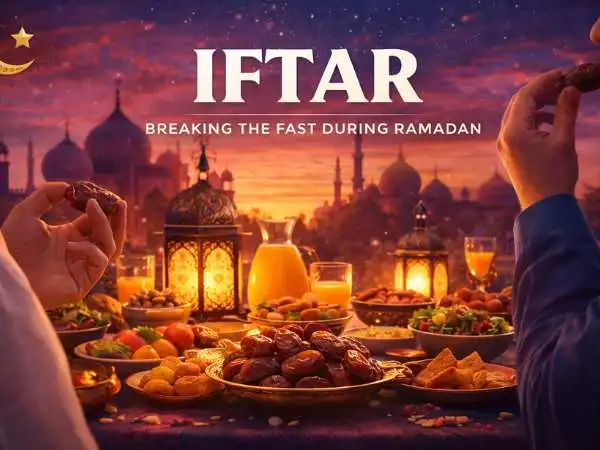
Iftar is the evening meal with which Muslims break their fast during the holy month of Ramadan. Observed daily at sunset, Iftar holds deep spiritual, cultural, and social significance for millions of Muslims around the world.
More than just a meal, Iftar is a time of gratitude, reflection, charity, and community bonding.
What Is Iftar?
Iftar is the meal eaten after sunset during Ramadan, marking the end of the daily fast (Sawm). Muslims fast from dawn (Fajr) to sunset (Maghrib), refraining from food, drink, and other physical needs.
The fast is traditionally broken with dates and water, following the practice of Prophet Muhammad (peace be upon him).
Why Is Iftar Important?
Iftar holds both religious and social importance:
- It marks the completion of a day of fasting.
- It symbolizes gratitude for sustenance.
- It strengthens family and community ties.
- It encourages charity and compassion.
Ramadan emphasizes patience, discipline, and empathy for the less fortunate, and Iftar becomes a daily reminder of these values.
When Is Iftar?
Iftar time begins immediately after sunset when the Maghrib call to prayer (Azan) is heard. The exact time varies depending on geographical location.
Muslims often check local Ramadan timetables for accurate Iftar timings.
Traditional Iftar Foods
Iftar meals vary across countries and cultures, but some common items include:
1. Dates and Water
The traditional way to break the fast.
2. Fruits and Juices
Fresh fruits, lemonade, or rose milk are popular choices.
3. Fried Snacks
- Samosas
- Pakoras
- Spring rolls
4. Main Dishes
- Biryani
- Haleem
- Kebabs
- Pulao
- Curries
5. Desserts
- Kheer
- Kunafa
- Sheer Khurma
- Baklava
The meal may be simple or elaborate, depending on family traditions.
Iftar Around the World
Iftar traditions differ globally:
- Middle East: Lavish spreads with dates, lentil soup, and grilled meats
- India & Pakistan: Samosas, fruit chaat, and Rooh Afza
- Turkey: Pide bread and soups
- Indonesia: Sweet drinks and local snacks
Despite regional differences, the spiritual meaning remains universal.
Community and Charity During Iftar
Mosques and community centers often host community Iftar gatherings where people break their fast together.
Charity (Zakat and Sadaqah) increases during Ramadan. Many organizations arrange free Iftar meals for those in need.
also read : – Holika Dahan: Significance, Rituals, History, and Why It Is Celebrated
Health Tips for Iftar
After fasting all day, it’s important to:
- Start with light foods
- Drink enough water
- Avoid overeating
- Include balanced nutrients
- Limit excessive fried foods
Proper hydration between Iftar and Suhoor is essential.
Spiritual Reflection at Iftar
Iftar is also a moment of prayer and gratitude. Many Muslims make dua (supplication) at the time of breaking their fast, as it is considered a spiritually powerful moment.
Conclusion
Iftar is more than a meal — it is a daily celebration of faith, patience, gratitude, and unity during Ramadan. Whether shared with family at home or in a large mosque gathering, Iftar brings people together and reinforces the values of compassion and generosity.
As Ramadan continues, Iftar remains one of the most meaningful and anticipated moments of each day.
Frequently Asked Questions (FAQs) About Iftar
What is Iftar?
Iftar is the evening meal Muslims eat to break their fast during the holy month of Ramadan. It takes place immediately after sunset.
At what time is Iftar?
Iftar begins at sunset, right after the Maghrib call to prayer (Azan). The exact timing varies depending on your location.
How is the fast traditionally broken at Iftar?
The fast is traditionally broken with dates and water, following the practice of Prophet Muhammad (peace be upon him).
What foods are commonly eaten at Iftar?
Common Iftar foods include dates, fruits, juices, samosas, pakoras, biryani, haleem, soups, and desserts like kheer or baklava.
Why are dates eaten during Iftar?
Dates provide quick energy, natural sugars, and essential nutrients, making them ideal for replenishing the body after a day of fasting.
Is Iftar the same everywhere in the world?
No, Iftar foods and traditions vary by country and culture, but the spiritual significance remains the same.
What is the difference between Iftar and Suhoor?
Iftar is the meal eaten at sunset to break the fast, while Suhoor is the pre-dawn meal eaten before the fast begins.
Can non-Muslims attend Iftar?
Yes, many communities and mosques host open Iftar gatherings where people of all faiths are welcome to join.
Why is Iftar important during Ramadan?
Iftar marks the completion of a day of fasting and serves as a time for gratitude, prayer, charity, and family bonding.
What dua is recited at Iftar?
Many Muslims recite a special supplication (dua) when breaking their fast, thanking Allah for the strength to complete the fast.

