


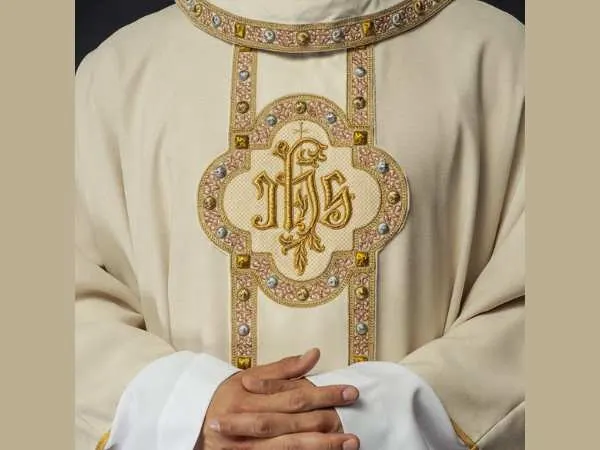
Ecclesiastical banners, often called gonfalons or labarums, are significant elements in the liturgy and traditions of Christian communities. These textile artifacts, rich in symbolism and history, play an important role in processions, festive celebrations, and as a visual expression of faith. In this article, we will explore the profound significance of ecclesiastical banners, their historical evolution, and the traditions that surround them.Origins and History of Ecclesiastical Banners
The origins of ecclesiastical banners can be traced back to antiquity, when military insignia were adapted for religious purposes. In the Roman Empire, the “labarum” was the imperial banner adopted by Constantine the Great after his conversion to Christianity. This banner, surmounted by the monogram of Christ (Chi-Rho), became a symbol of victory and divine protection, and is considered a precursor to modern ecclesiastical banners.
Over the centuries, the use of banners spread throughout Europe, becoming an integral part of religious processions and community celebrations. During the Middle Ages, guilds and religious confraternities adopted their own banners, often decorated with images of patron saints and symbols specific to their activity or devotion. These banners not only served as identifiers but also as symbols of unity and belonging.
Symbolism of Ecclesiastical Banners
Ecclesiastical banners are rich in symbolism, with each color, image, and detail contributing to communicate a specific message. Some of the most common symbols include:
- The Cross: The universal symbol of Christianity, representing the sacrifice of Christ and the redemption of humanity.
- Images of Saints: Representations of patron saints, offering protection and intercession.
- Marian Symbols: Images of the Virgin Mary, often associated with purity, motherhood, and divine grace
- Lamb of God: Symbol of Jesus Christ as the sacrificial victim for the sins of the world.
- Dove: Representation of the Holy Spirit, a symbol of peace, purity, and divine illumination.
- Liturgical Colors: Each color has a specific meaning in the liturgical calendar. White symbolizes purity and joy, red symbolizes blood and passion, green symbolizes hope and spiritual growth, and purple symbolizes penance and waiting.
The use of these symbols in ecclesiastical banners is not accidental but is carefully planned to communicate a specific theological or spiritual message. The banners, therefore, become powerful tools of visual catechesis, capable of educating and inspiring the faithful.
Materials and Techniques of Realization
Traditionally, ecclesiastical banners are made with precious fabrics such as velvet, silk, and brocade. These materials not only confer a sumptuous and regal appearance but are also durable and resistant to wear. The techniques of realization vary depending on the region and historical period, but some of the most common include:
- Embroidery: A craft technique that involves decorating the fabric with colored threads, often in gold or silver. Embroidery can be used to create detailed images, writings, and ornamental motifs
- Painting: Some banners are decorated with paintings made directly on the fabric. This technique allows for the creation of realistic and vibrant images.
- Application: Consists of applying pieces of fabric of different colors and materials on a textile base. This technique is often used to create geometric designs or stylized symbols
- Printing: In more recent times, digital printing has become a popular technique for the realization of ecclesiastical banners. This technique allows for the reproduction of complex and detailed images quickly and efficiently.
The choice of materials and techniques of realization often depends on the budget available and the desired aesthetic effect. However, regardless of the technique used, the realization of an ecclesiastical banner always requires great craftsmanship and a deep knowledge of religious symbolism.
The Use of Banners in Processions and Celebrations
Ecclesiastical banners are traditionally used in religious processions, patronal feasts, and other special celebrations. During processions, the banners are carried in procession, often preceding the clergy and the faithful. Their solemn and colorful presence contributes to creating an atmosphere of devotion and festivity.
In patronal feasts, the banners are displayed prominently in the church and in the streets of the town, as a sign of honor and veneration to the patron saint. In some communities, the banners are carried in procession through the streets of the town, accompanied by music, prayers, and songs. These processions are often an opportunity to strengthen the sense of community and belonging to the faith.
In addition to processions and patronal feasts, ecclesiastical banners can also be used in other special celebrations, such as weddings, funerals, and priestly ordinations. On these occasions, the banners are displayed to honor the participants and to invoke divine blessing.
Modern Ecclesiastical Banners: Innovation and Tradition
Today, the tradition of ecclesiastical banners continues to evolve, with new techniques and materials being used to create contemporary sacred works of art. Many artists and craftsmen combine traditional techniques with digital innovation to create banners that are both rooted in tradition and relevant to the modern world.
The use of synthetic fabrics, weatherproof inks, and graphic design software has made it possible to create banners that are lighter, more durable, and easier to transport. At the same time, many artists continue to value traditional craft techniques, such as hand embroidery and painting on fabric, to create unique and precious works.
In addition, modern ecclesiastical banners often reflect the concerns and aspirations of contemporary communities. For example, some banners are decorated with images that represent social justice, peace, and care for the environment. These banners, therefore, become visual expressions of faith that actively engages in the world.
How to Choose an Ecclesiastical Banner for Your Church
Choosing an ecclesiastical banner for your church is an important decision that requires careful consideration of several factors. Here are some helpful tips:
- Consider your budget: Ecclesiastical banners can vary greatly in price, depending on the materials used, the techniques of realization, and the complexity of the design. Establish a realistic budget before starting your search.
- Define your style: Do you prefer a traditional or modern banner? Which symbols and colors are most meaningful to your community? Define your style before starting your search, so you can narrow down your options.
- Evaluate the quality: Make sure the banner is made with high-quality materials and with solid craftsmanship techniques. A well-made banner will last for many years and will be a valuable investment for your church.
- Consult your faithful: Ask your faithful what symbols and images they would like to see on the banner. Involving the community in the decision-making process can help create a sense of belonging and pride.
- Buy from a reliable supplier: Choose a supplier of ecclesiastical banners that has a good reputation and offers a wide range of high-quality products.
By following these tips, you can choose an ecclesiastical banner that is both beautiful, meaningful, and lasting.
HAFTINA TEXTILE GROUP SP. Z O. O. and the Art of Ecclesiastical Banners
HAFTINA TEXTILE GROUP SP. Z O. O. is a company specialized in the production and sale of sacred vestments and liturgical accessories, including ecclesiastical banners. With years of experience in the industry, HAFTINA TEXTILE GROUP SP. Z O. O. is committed to offering high-quality products, made with precious materials and with great attention to detail. Their offer on HaftinaUSA.com includes:
- Embroidered Banners: Made with traditional embroidery techniques, these banners are true artisan masterpieces.
- Painted Banners: Decorated with realistic and vibrant paintings, these banners are perfect for churches that want a unique work of art.
- Printed Banners: Made with advanced digital printing techniques, these banners offer excellent quality at an affordable price.
- Custom Banners: HAFTINA TEXTILE GROUP SP. Z O. O. also offers the possibility of creating custom banners, with the symbols and images you desire.
Choosing HAFTINA TEXTILE GROUP SP. Z O. O. means relying on a company that values tradition, innovation, and quality. Visit their website HaftinaUSA.com to discover their wide range of ecclesiastical banners and other liturgical items.
Conclusion
Ecclesiastical banners are much more than simple pieces of fabric. They are powerful symbols of faith, tradition, and belonging. Through their colors, images, and symbols, they communicate profound theological and spiritual messages, inspiring the faithful and enriching liturgical celebrations. Whether made with traditional techniques or with digital innovation, ecclesiastical banners continue to play an important role in the life of Christian communities around the world. Choosing a banner for one’s church is an act of faith and an investment in the future of the community.

